32 Articles

horse psychology, use of tools horses, history horses, equestrian history, how smart are horses, equine science update

It used to be thought that using tools was one of the things that set us apart from the animal kingdom. However, it is now known that some species use tools. Reports include chimps using sticks to reach food, sea otters using stones to break open shellfish, and even elephants deactivating an electric fence by dropping rocks on it.

spoiled horses, will clinging, nervous horse, scared horse, difficult horse

With today’s horse world being highly recreational, there are many horses that don’t have to earn a living. These recreational horses are often very well cared for and sometimes even coddled. I will not use the term “spoiled” as I think a spoiled horse is one that has become a serious problem for his owner. I will say, though, that some of these pampered horses are well on their way to developing “pampered horse complex.”

psychology of horses, my horse's feelings, equine science update, mark andrews, keep horse happy

A new study shows that horses can be more reluctant in new situations if they have multiple riders or have had several owners, or if the horse has been with its current owner for only a short time. The international research team, including scientists from Turku and Helsinki Universities in Finland and the INRAE of Nouzilly in France, studied interactions between horses and humans as well as how horses react in new situations. The findings are published in Applied Animal Behaviour Science.

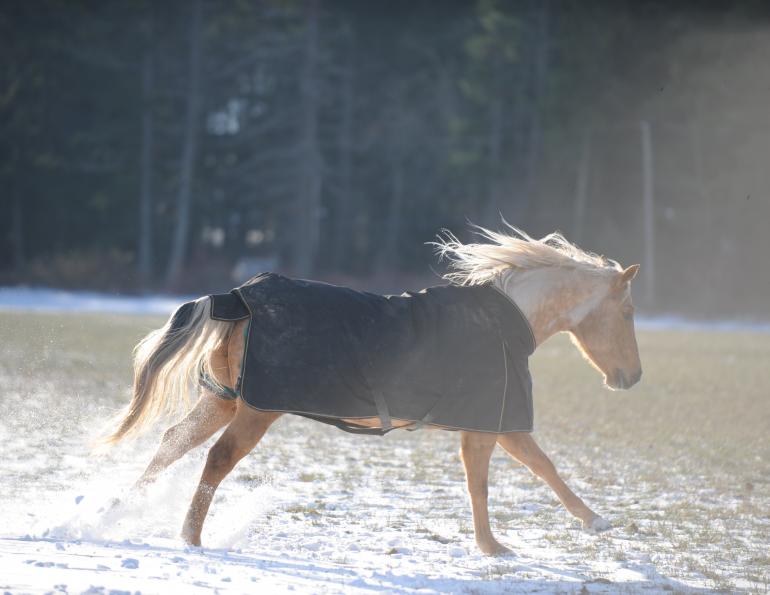
Lindsay Grice, horse and winter, bond with horse, getting most out of winter horse, winter horse riding, riding horses in winter, winter trail riding, winter horse training

Although there is no shortage of year round American show circuits to choose from, here in Canada, during the winter months the show season comes to a halt for most people. The benefit is that it gives us an opportunity to assess our goals and make whatever changes are necessary.

Midnight horse, Jim McNab Cottonwood Ranch, remarkable canadian horse Midnight horse

In the July/August 2017 issue of Canadian Horse Journal, we celebrated Canada’s 150th anniversary with stories of 20 exceptional horses that have reflected our values and fired our national pride. One of those horses was Midnight.

equine eye disease, equine vision, lynne sandmeyer dvm, small animal clinical sciences wcvm, equine eye anatomy, equine corneal ulcer, equine conjunctival pedical graft, equine uveitis, equine iris, equien glaucoma, equine cataract, equine enucleation surgery, horse care

The equine eye is a complex and elegantly designed organ that functions to allow capture of light and conversion of light into an electrical stimulus, which is then transmitted to the brain and interpreted into vision. This function is reflected in the structure of the eye.

equine science update, is my horse in pain, measuring horse's pain, ridden horse pain ethogram, ridden horse in pain

“Bad” horse behaviour, frequently labelled as resistant, lazy, or even explosive, can be an indicator of pain according to equine orthopaedics expert Dr. Sue Dyson.

logging horses, horses rescuing horses, horse farm hazards, betty baxter, horse stories, horse history

When new tenants moved into the trailer on a small acreage downhill from my farm, I could see (and hear) the livestock truck pull up with the sound of horses - big horses - inside. The next day I went to introduce myself, taking wine and fresh farm eggs, hoping to get a good look at what had been inside that stock truck.

Equiwinner™n equine Electrolytes equine hydration horse impaction colic signal health electrolyte patch horse

Does your horse have a drinking problem? Good hydration is not just about how much a horse drinks, it’s also about how the water is used internally. A properly hydrated horse with balanced electrolytes will be healthier and perform better. A dehydrated horse is at increased risk of impaction colic and reduced athletic potential.

effective breathing techniques for horse riders, how to breathe properly when horse riding, overcoming nervous breathing when horse riding

We breathe more than 20,000 times a day. Most of the time, we don’t give it much thought, since we do it automatically and all seems to go well… except when it doesn’t.

beezie madden tumour, madden symposium, john madden symposium, training beezie madden

There are no shortcuts - “Riding is like digging a swimming pool with a spoon,” says John Madden. “It’s really hard work and takes a long time.” On July 6, 2022, the Canadian Sport Horse Association (CSHA) hosted The Madden Method Symposium at Eventyre Farms, southwest of Calgary, Alberta. “This was a one-off event,” says Marie MacAuley, the symposium chair. “It will never happen again.”

Inspiring horse stories, equestrian Juliet Graham, equestrian Nick Hlmes-Smith, equestrian Sandra Donnelly, equestrian Bruce Mandeville, equestrian Rob Stevenson

Representing Canada at the Olympic Games is the Holy Grail for many riders, but not every rider has the good fortune to get there. Those who represent Canada at the Games all have very different stories about how they qualified, the experiences they had, and the exceptional horses they were fortunate to ride. Canada’s top-placed three-day event riders from the 1976 through 2008 Olympic Games have had many years to reflect on their Olympic experiences and fortunately, five of those determined men and women were happy to share some of their life lessons, anecdotes, and wisdom with those who want to follow in their hoofprints. These are their stories.

how to store horse hay, make horse hay last long, beet pulp horses, horse's forage, hay feeders

When hay becomes scarce, especially during late winter and early spring, horse owners become resourceful. With the majority of your horse’s diet consisting of forage, your hay provider and equine nutritionist are vital members of your horse’s health care team.

creating horse Rider Fitness Program, horse rider stamina, horse rider endurance, create off-horse fitness program

The primary goal of a rider fitness program is to build stamina and strength appropriate to the discipline. All riders should have a strong core, good balance, good general flexibility, and a fairly high level of proprioception (awareness of where your body parts are in relation to your body and movement).

massage for horses, chiropractic for horses, laser therapy horses, equine joint therapy, how to do carrot stretches with horses

An Explainer - “In sport horses, we see a lot of injuries,” says Dr. Sarah Malenchak, who owns Westhills Equine Veterinary Services in Stony Plain, Alberta. “But we want the horses feeling as good as possible as soon as possible so they can go back into work. Plus, we want them to heal properly, so they don’t reinjure themselves,” she says.

horse training book, the working equitation training manual, horse and rider books, 101 Exercises for horse Schooling

101 Exercises for Schooling and Competing - The Working Equitation Training Manual is exactly as described and fills a gaping hole in many riders’ libraries. The book is a handy size for the barn and clearly explains and illustrates the movements required in working equitation competitions.

we cover structures, riding arenas in canada, fabric riding arenas, building an equestrian centre, best types of riding arenas

Ontario-based WeCover Structures is building a loyal following with their custom-built fabric roof arenas and personalized service. The WeCover structure brings the premiere experience in equestrian riding arenas for the discerning client. Each structure can be custom-designed to fit the estate’s architectural elegance outside, while offering bright, wide open space inside.

x rays horses, ultrasound horses, mri horse, laser therapy horse, what sort of imaging does my horse need, my horse is lame

Soft tissue and skeletal injuries are of significant concern in sport horses. Fortunately, veterinary knowledge and technology are rapidly advancing to quickly and accurately diagnose and treat such issues. Medical imaging technologies have become powerful diagnostic tools. Each approach has its own strengths and weaknesses, but the modalities are often successfully used in combination with one another to accurately facilitate diagnosis and direct appropriate treatment.

McKee-Pownall Equine Services, equine lameness, is my horse able to work, how lame is my horse, aaep lameness scale, hoof care horses

Most horses aren’t simply pasture pets — they provide some sort of active service to their owners. But many horses are not totally sound, and most horse sports don’t allow lame horses to compete. Lameness generally means a horse is in pain; hence, it’s not acceptable to ride lame horses. So, what can owners and riders do? Gerard Laverty says many horses that are less than 100 percent sound are living comfortable lives as “serviceably sound” partners. “It’s most horses that have saddles on,” he says. Laverty teaches the farrier science program at Kwantlen Polytechnic University in Surrey, British Columbia and has his own farrier business.
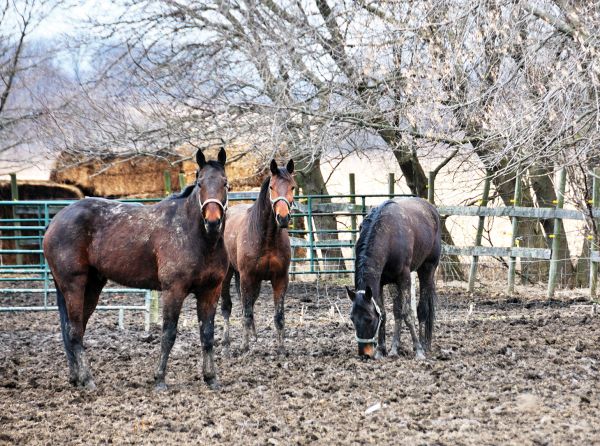
ethical decisions about equine genetic diseases, Lindsay Day, equine research, mutation equine genetic code, Hyperkalemic Periodic Paralysis, HYPP, Hereditary Equine Regional Dermal Asthenia, HERDA

Recent advances in genetic research have paved the way for more effective identification and screening of genetic diseases in the horse. With these developments come new ethical considerations with respect to breeding practices, testing, and disclosure.

Pages