2 Articles

April D. Ray, horse braiding, how to braid a horse, how to braid a horse's mane, horse mane braiding, horse tail braiding, hunter braids, jumper braids, dressage braids, horse show turnout, horse show grooming, horse grooming, horse mane, horse tail, hunter horse, jumper horse, dressage horse, braiding horse mane, braiding horse tail, horse show preparation, equestrian grooming, equestrian turnout, show horse grooming, braiding tutorial, Canadian Horse Journal

Braiding a horse’s mane and tail is a tradition with deep historical roots. Originally, it served a very practical purpose—keeping the mane from getting caught in tack, tools, or the weapons used by mounted hunters and soldiers. According to old legends, fairies were believed to sneak into barns at night and weave “elf knots” into horse manes to ride them. A more sinister version of the tale suggests that thieves would tie knots in a mane to mark horses they planned to steal. Over time, braiding also came to symbolize class, with neatly plaited manes and tails identifying horses of high breeding or importance.

running a horse barn, hiring horse people, keeping an equestrian facility, managing horse boarders, taking care of horses, nikki alvin smith

Running a successful horse farm or boarding stable takes more than excellent horsemanship—it also requires strong leadership. Whether you manage a large equine operation or a small private barn, finding dependable employees to handle horse care, lessons, training, and daily barn chores can be one of the biggest challenges. Many horse professionals admit they are more comfortable managing horses than managing people, but the skills needed to lead a team are easier to develop than you might expect. These practical strategies can help you build a stronger, more effective workplace.

acera insurance, horse insurance canada, horse mortality insurance, insurance claim injured horse, insurance claim horse with colic, ulcer horse insurance

Everyone who’s involved in the horse industry undoubtedly has at least one sad tale of an equine injury or illness which was hard on their bank account or riding goals. According to Mike King, Partner and National Director of Equine Programming at Acera Insurance, the three most common equine insurance claims are for colic, ulcers, and lameness. Here’s why they’re prevalent, along with tips for prevention.

Kathy Smith, skin cancer in horses, horse skin cancer, equine skin cancer, sarcoids in horses, equine sarcoids, sarcoid tumours in horses, equine melanoma, melanoma in horses, squamous cell carcinoma in horses, horse skin tumours, horse lumps and bumps, equine health, horse health, horse cancer, equine veterinary care, horse tumour treatment, horse disease, horse owners Canada, Canadian horse industry

Keep an eye out for the three most common skin cancers in horses and reach out to your veterinarian if you notice any unusual lumps or bumps.

Margaret Evans, Midnight horse, Midnight bucking horse, Midnight rodeo horse, Jim McNab, Cottonwood Ranch, Calgary Stampede, Canadian rodeo history, legendary bucking horse, saddle bronc horse, bronc riding, Pro Rodeo Hall of Fame, Fort Macleod Alberta, remarkable Canadian horses, Canadian horse history, famous Canadian horses, rodeo horses, Western heritage, Canadian horse industry

In the summer of 2017, we celebrated Canada’s 150th anniversary with stories of 20 exceptional horses that have reflected our values and fired our national pride. One of those horses was Midnight.

senior performance horse, ageing horse, older competition horse, senior sport horse, horse fitness, equine conditioning, geriatric horse care, horse health, equine athlete, dressage horse, show jumping horse, horse training, equine veterinary care, maintaining older horses, Canadian horse owners

There comes a time when even the horse that has carried you to countless victories begins to show signs of age. For many riders, accepting that a trusted competition partner is becoming a senior can be difficult. Yet with modern advances in veterinary medicine and improved management practices, many horses now continue to perform successfully into their late teens and even their twenties. This is particularly true in disciplines such as dressage and show jumping, where years of training and experience are essential to reaching the highest levels of competition.

horse won't go through gate, gate exercises horses, competitive trail competitions, working equitation, mountain trail horse, extreme cowboy tests, horse afraid gate

Essentially, a gate is a transition from here to there. It’s a transition from one pasture to another, replicated in competition. Learning to work a gate can be part of your horse’s training transition into a more attentive, patient, and handy partner.

ThinLine Canada Trifecta Expressions Half Pad, Saddle Pads Canada, Summerside Tack

Better for the Horse. Better for the Rider. “We recommend ThinLine for horses that are back sore, horses that have saddle issues, and to help reduce the impacts that riding has on horses,” says FEI certified veterinarian Dr. Fernando Cardenas in North Carolina, USA who also breeds warmblood sport horses.

horse fencing, horse fence, safe horse fencing, horse fencing Canada, equine fencing, horse farm fencing, pasture fencing for horses, horse paddock fencing, horse property management, horse pasture, horse safety, horse farm design, equestrian facility, fencing for horses, horse stable fencing, horse turnout paddock, horse farm safety, horse care, Canadian horse farms, equine property planning

Choosing the right horse fencing is one of the most important decisions when planning or upgrading an equine property. Beyond defining boundaries, fencing represents a significant long-term investment that influences horse safety, property security, day-to-day management, and the overall appearance of a farm or stable. A well-designed fence should safely contain horses while discouraging unwanted visitors, including loose dogs and trespassers. It also makes it easier to manage grazing and separate horses according to age, sex, value, or intended use. However, not every type of fencing is appropriate for horses.

Silver Honey for horses, MicroSilver BG horses, manuka honey horses, equine skin care, mud fever horses, pastern dermatitis care, horse wound care products, Absorbine Silver Honey

Horse people know that healthy skin is a cornerstone of comfort and performance. From small nicks to irritation around the pasterns in wet seasons, our goal is always the same: protect the skin barrier while keeping the environment calm, clean, and comfortable. Silver Honey® products bring together two nature-derived powerhouses, MicroSilver BG® and Mānuka Honey, to do exactly that. Below is a practical look at what each ingredient is, how it works, and why that matters.

horse respiratory health, equine respiratory system, horse breathing problems, respiratory disease in horses, equine lung health, horse performance, performance horses, horse coughing, nasal discharge in horses, horse airway disease, equine exercise, horse stable management, horse ventilation, dust in horse barns, horse bedding, horse hay dust, respiratory irritants, equine health, horse care, Canadian horses

A healthy respiratory system is essential to every horse's well-being and athletic performance. Like humans, horses rely on their lungs and airways to deliver oxygen throughout the body, but the demands placed on their respiratory system increase dramatically during exercise. Efficient oxygen exchange allows working muscles to perform, while the respiratory tract also serves as an important defence system by filtering and removing dust, bacteria, ammonia, and other airborne irritants. Although mucus, coughing, sneezing, and nasal discharge help clear the airways, excessive amounts of these signs may indicate an underlying respiratory problem.

Lindsay Grice, flat class, rail class, horse show flat classes, horse show rail classes, horse show judging, horse show judge, equitation, hunter under saddle, western pleasure, western horsemanship, show hack, pleasure hack, road hack, English equitation, horse show tips, show ring strategy, horse show preparation, horse showing, equestrian competition, equestrian Canada, Canadian horse industry, English riding, Western riding, correct leads, diagonals, self-carriage, horse turnout, show ring etiquette

Riding the Rail - No jumps. No pylons. No letter markers. Unlike classes assessing the accuracy of patterns, the quality of movements in tests, or how the competitor meets each jump on course, flat or rail classes appraise the picture of you and your horse in profile.

Canadian Horse Journal recognized at the 2026 Equine Media Awards for excellence in equine journalism

Canadian Horse Journal was once again recognized for editorial excellence during the American Horse Publications (AHP) 2026 Equine Media Awards held during the AHP annual conference in Lexington, Kentucky in May.

Teresa Pitman, Prof. Michael Lindinger, University of Guelph, Equine Guelph, horse heat stress, overheating horses, horse hydration, equine hydration, horse cooling techniques, cooling horses in summer, horse sweating, electrolyte supplementation for horses, horse electrolytes, summer horse care, riding in hot weather, horse exercise safety, equine health, horse wellness, heat acclimatization in horses, preventing heat stress in horses, horse body temperature, equine physiology, horse sweating and hydration

A hot humid day. One rider. One horse. Both are exercising at a moderate level. Who is more likely to overheat? It might surprise you to learn that your horse gets hotter much faster than you and is more susceptible to the negative effects of heat stress. Prof. Michael Lindinger, an animal and exercise physiologist at the University of Guelph, explains: “It only takes 17 minutes of moderate intensity exercise in hot, humid weather to raise a horse’s temperature to dangerous levels. That’s three to ten times faster than in humans. Horses feel the heat much worse than we do.”

Rider using Equisk resistance bands on RooElla horse simulator to improve stability, posture, and equestrian biomechanics.

RooElla, the interactive horse simulator owned by Susan Cruickshank of Oakwood, Ontario, is a perfectly schooled mechanical dressage horse that is highly sensitive to its riders’ aids. During a session with Cruickshank and RooElla, riders gain instant feedback about leg pressure, seat position, and rein contact. It is the ultimate tool for helping riders be the best they can be for their horses.

managing resistant horse parasites, donna foulk, horse parasite control, Small strongyle larvae, horse manure, horse parasites, horse care, Parasite Control Program, horse deworming

Parasite prevention remains a vital part of maintaining horse health—but gone are the days when you could rely on a routine deworming every eight weeks with the same product.

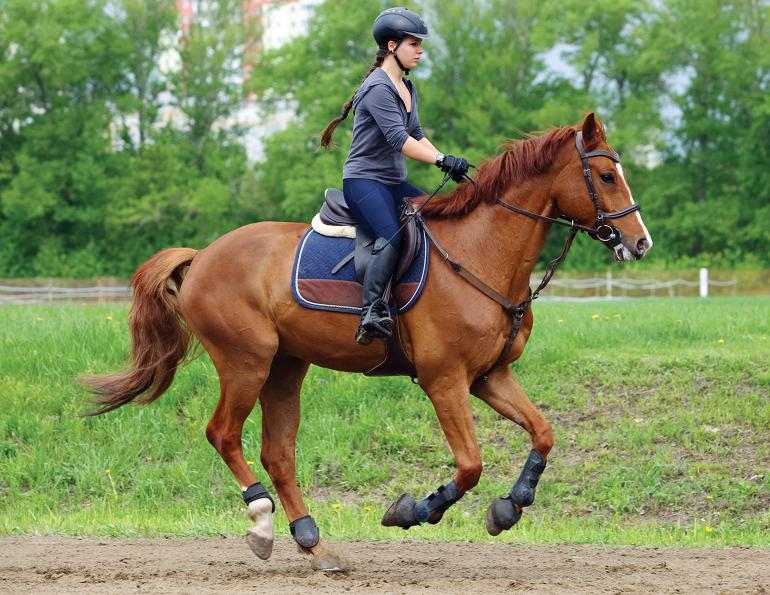
Senior horse under saddle demonstrating the benefits of consistent exercise for maintaining fitness, mobility, and soundness.

A daily anxiety for many owners of senior horses is that there may be little time left for the riding and activities they have enjoyed until now. As a horse approaches and then passes the age of 20, good rides start to feel numbered. The swayback, gait irregularities, lack of energy… these outcomes seem to be only a matter of time. And without clear reason to do so, many owners start backing off, easing the horse into retirement. Ironically, this approach usually hastens a horse’s decline instead of delaying it.

how to properly clip your horse's face, how to clip horse's Bridle, path, how to clip horse's legs

Before you even start clipping, good tool care should be your top priority. Whether you’re giving your horse a full body clip or simply neatening up, sharp, clean, and well-lubricated blades will produce smoother results and help your equipment last longer. Take a moment to inspect the clippers and cords for any wear or damage before switching them on.

Care & Feeding of Overgrazed Horse Pastures, overgrazing horses, Horse Pasture Maintenance, ferris fencing, fencing for horse grazing

Good pastures depend on good soil. That’s why professional contractors see your pastures literally from the ground up. The quality of the growth above ground will tell them the state of the root growth and the soil.

preventing flies horses, diseases mosquitoes horses, fly sheets, fly masks, manure pile location, botfly eggs on horse, horse fly leggings, parasitic wasps

How flies spread parasites and disease - Flies are the bane of many horses’ existence from spring through autumn. In Canada, horse-biting flies include gnats (no-see-ums), black flies, stable flies, deer flies, horse flies, and mosquitoes, all of which create painful sores. Non-biting flies include house flies, eye gnats, face flies, bot flies, and warble flies, and can be just as irritating. It’s not just buzzing and biting that’s worrisome; flies may transmit parasites and diseases, can cause a horse’s immune system to overreact, and some use horses as hosts, all of which impact horse health. Preventing horses from being bitten is key. Before diving into solutions, here’s a summary of the damage that flies can inflict on Canada’s horses.

Pages