


Creative Techniques for Productive Lunging

Updated:
June 3, 2026By Jec A. Ballou
To lunge or not to lunge? Numerous riders grapple with this question, weighing the potential deleterious physical impacts with the exercise value for non-ridden horses. Whether lunging is good or bad turns out to have a nuanced answer. A more practical inquiry might not be whether to lunge, but how and when to lunge.
Lunging, after all, can take numerous different forms, some of which are inarguably harmful. Beyond mishaps caused by speed or wild antics at the end of a lunge line, horses suffer the consequences of repetitive movement, which is a leading source of sports injuries. Compounding the shear forces on lower limb joints when traveling around an arc with the strain on muscles being in static contraction for long periods, repetitive circling takes a toll.
This does not mean, however, that it needs to be entirely avoided. It is a useful tool, but it is a tool that requires a plan and specific execution. The main factors to keep in mind include ground reaction forces, speed, total duration per week, and footing surface.
Related: How to Support Your Horse Through Change

A calm jog-trot in straight lines will reduce the amount of time spent circling on the lunge line. Photo: Alamy/Manfred Grebler
Related: Equine Boarding School
Ground Forces
Let’s start with ground reaction forces and speed. Many years ago, equine researcher Hilary Clayton performed numerous studies involving horses moving across measurement plates at different speeds. Her team determined that each forelimb experiences forces up to half of the horse’s bodyweight in walk, 100 percent of bodyweight in regular trot, and up to twice its bodyweight in canter.
In recent years, biomechanics experts have been able to further interpret these findings. In particular, trotting with higher levels of suspension and extension increases peak vertical forces on each forelimb, especially when the horse lacks ideal body carriage. This means the load on each forelimb in many cases exceeds the horse’s bodyweight. That is a lot of force to repeat stride after stride, especially considering that curved lines further increase these forces. In other words, if your horse has a big bouncy trot or canter and he is performing numerous circles, you could be in risky territory.

Shorten the duration of time spent lunging by ponying the non-ridden horse for 20 minutes, mostly in straight lines, before lunging for 10 minutes. Photo: Alamy/Manfred Grebler
Related: Get Your Horse On a Track System
Speed
For this reason, when riders may need to rely on lunging to exercise their horse due to poor weather or other circumstances, it becomes crucial to minimize impact and utilize slower gaits. A calm jog-trot lessens the impact to lower joints, spinal stabilizers, and hooves while still activating muscles and delivering aerobic stimulus. This is sometimes called the “rehab trot” as it enables exercise to proceed but without the negative impact of full-force gaits.
While it might be tempting to maximize time spent lunging by surging the horse around to burn off energy and work up a sweat, this is when strain happens. It is far more productive, and less harmful, for the horse to perform a rhythmic and calm gait.
Related: Is Desensitizating Your Horse Helpful?
Duration
Now let’s talk about duration, or how much or little to lunge. Ideally, a horse in a balanced training program receives plenty of cross-training with only one day per week of lunging that does not exceed 20 minutes. Realistically, there are periods when horses are not able to be ridden and end up lunged much more often. These are times to employ creativity. With careful planning, riders can avoid endless — and harmful — circling in these sessions.
During a lunging session, it is critical to intersperse lots of straight lines, even if this means lunging a few circles and then leading — or jogging beside — your horse on a straightaway before performing more circles. I refer to this as “controlled wandering,” the basic idea being to blend as many straight lines as possible in with all those circles. When successful, you will find yourself putting down tracks all over your arena. Think of this as a time to guide your horse’s body on various lines of travel instead of being stuck going round the same circle.
Another tactic I use is to pony the non-ridden horse alongside one of my riding horses for an initial 20 minutes, during which we travel mostly straight lines or wander around the field. Then, I immediately lunge the horse but only for 10 minutes. This delivers the horse 30 minutes of quality aerobic exercise with only 10 minutes spent circling repetitively. Again, it comes down to getting creative and planning to avoid endless circling when fulfilling the horse’s daily exercise needs. At the very least, the warm-up and cooldown are times to prioritize other activities that can complement the lunging.

Getting creative can include lunging on different surfaces and on gently sloped terrain. Photo: AdobeStock/Annabell Gsodl
Related: Safe and Sensible Equine Herd Integration
Footing
Finally, riders should consider the surface on which most of their lunging happens. A packed clay arena, for instance, impacts joints differently than loose sand, wood chips, or grass. Each surface comes with its own positive and negative conditioning effects, but time spent exclusively on any surface hastens wear and tear. Once again, this is due to the negative result of repetitive forces on the body. When possible, try to do your groundwork on a different surface than usual every other week or so. This will help mitigate overload to both soft tissues and joints.
As you seek out different surfaces, remember there is also value in gently sloped terrain. Lunging on the side of a gradual slope offers the horse great exercise for core muscles. It also creates an opportunity for the horse to constantly adjust his balance and center of gravity with the terrain. This dynamic use of the body interrupts the strain cycle of muscles operating in constant tension on a curved line.
Ultimately, the question of whether lunging is productive comes down to how it takes place. It can be a fruitful part of your horse’s schedule, but it can also take a physical toll. Remember to factor ground forces, speed, surface, and total weekly duration. And above all, get creative with your implementation.
Related: How to Use Hills for Horse Training
Related: What Are Corrective Exercises for Horses?
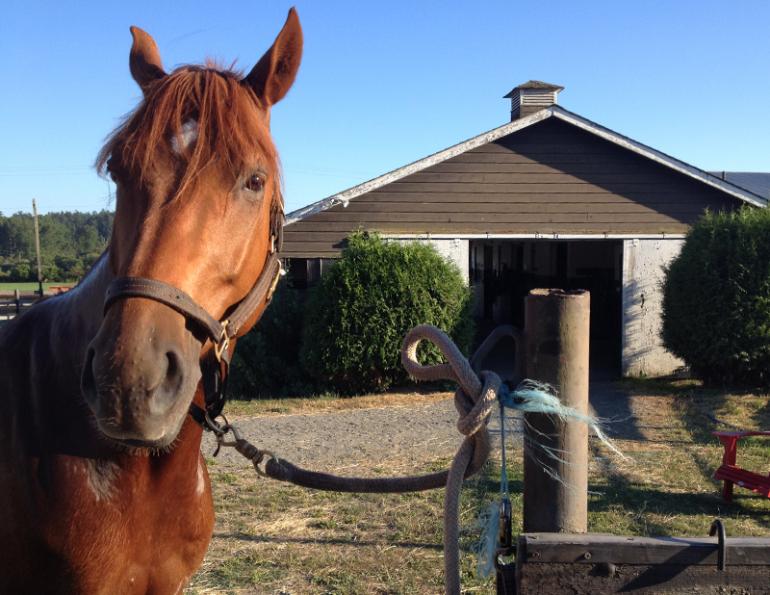
Main photo: courtesy of Jec Ballou
Blogs & Podcasts
Advertisement

Related Articles


Advertisement

Featured Stories







Advertisement
