


Book Review: The Great Horse Flu - A Forgotten Contagion and the Fate of Reconstruction America

Updated:
October 20, 2026By Thomas G. Andrews
Published by The University of North Carolina Press, ISBN 9781469698434, 336 Pages, Hardcover and Kindle, Publication date: October 6, 2026
Reviewed by Tania Millen, BSc, MJ
Imagine if all the cars, transport trucks, and trains across North America stopped operating, along with phones and the internet. How would goods and people travel and news be shared? That scenario is the real 1800s world that Thomas G. Andrews shares in The Great Horse Flu: A Forgotten Contagion and the Fate of Reconstruction America.
In September 1872, in the fields north of Toronto, Ontario, pastured horses started getting fevers and respiratory issues. A few short weeks later, the illness had spread throughout the northeast of North America. The New York Herald newspaper stated that thousands of residents had to travel by foot; New York City was at a standstill; and goods were piled up to three metres high on New York’s wharves as ships couldn’t be loaded or emptied without horses.
Carpenters, masons, and tradesmen were out of jobs; they simply couldn’t transport their needed materials without horses. Playhouses and concert halls had no customers as patrons had no transportation. Coroners had no way of transporting the dead except by man-hauling; loggers couldn’t log; farmers couldn’t harvest. The entire continental northeast was at a standstill and the Great Horse Flu raced on across North America.
Related: Book Review: Cowboy - American Icon
Andrews writes, “Fast forward to fall 1873, and the Great Horse Flu had permeated most of North America.” It infiltrated every part of nascent Canada and the United States, most of Mexico and Cuba, then petered out in Guatemala and Nicaragua due to lower numbers of equine hosts. Newspapers alleged that between 90% and 100% of all equines became ill.
Andrews reports, “The Great Horse Flu’s ability to sicken all or nearly all the equines everywhere it struck easily ranks it among the most transmissible outbreaks of mammalian disease ever recorded.” His book is an extensively researched and footnoted account of the Great Horse Flu and offers insight into how a highly contagious — but rarely deadly — disease brought an entire continent to a standstill. Written in the post-COVID-19 era, Andrews also considers society’s actions after the 1870s horse flu and how they helped tamp down future diseases. Sanitation, vaccines, sulfa drugs, and antibiotics such as penicillin have all decreased the ascendency of yellow fever, malaria, measles, and whooping cough, among other awful diseases.
However, Andrews offers a cautionary tale, postulating that mankind’s ability to control new viral maladies that may cross the human-animal divide depends upon our faith in vaccinations, quarantine, public health measures, and the capacity of governments to tackle future outbreaks.
Andrews’ history of the Great Horse Flu of the 1870s reveals how a highly contagious equine disease crippled North America’s horse dependent society and reshaped public health practices, while raising concerns about modern vulnerabilities to emerging viruses that spread between animals and humans. Jam-packed with quotes from media of the day, it’s a captivating story that horse people, history buffs, and public health advocates will find fascinating.
Related: Book Review: Stable Recovery - Horse Horses Transform Homeless Men into Horsemen
Review:
Book Review: The Great Horse Flu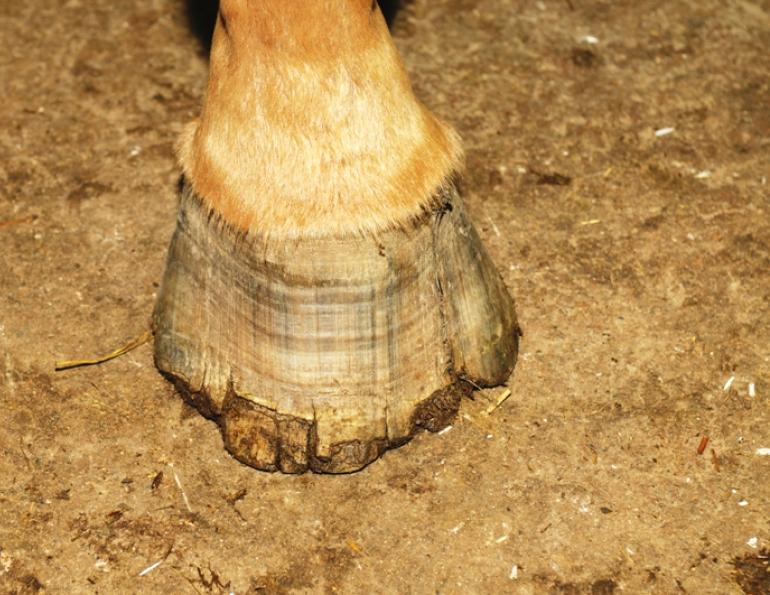
Blogs & Podcasts

Advertisement

Related Articles






Advertisement

Featured Stories










Advertisement
