Clicker Training – Reward-Based Training for Horses
Updated:
March 24, 2026By Alexa Linton, Equine Sports Therapist
Three decades ago, stepping into the world of riding meant entering a system where pressure-based methods were simply the norm. Training approaches were built around negative reinforcement, and there was far less awareness of how horses think, learn, and respond. At the time, efficiency and compliance were often valued above understanding. Looking back, unlearning those habits — ones that had been repeated and reinforced for years without question — has been one of the most challenging aspects of my development as a rider.
In more recent years, I have begun to explore approaches that prioritize clarity, communication, and the horse’s experience. Among them, positive reinforcement — often referred to as R+ — has offered a markedly different perspective. Already well established in other animal training fields, it is gradually becoming more visible within the equestrian community.
A key component of this approach is clicker training. Rather than relying on pressure and release, it uses a clear, consistent marker — such as a distinct sound or word — to identify the exact moment a horse offers the desired response. That moment is then followed by a reward, typically a small amount of food. Over time, this system allows behaviours to be developed in a way that invites the horse to think, participate, and engage more willingly in the learning process.
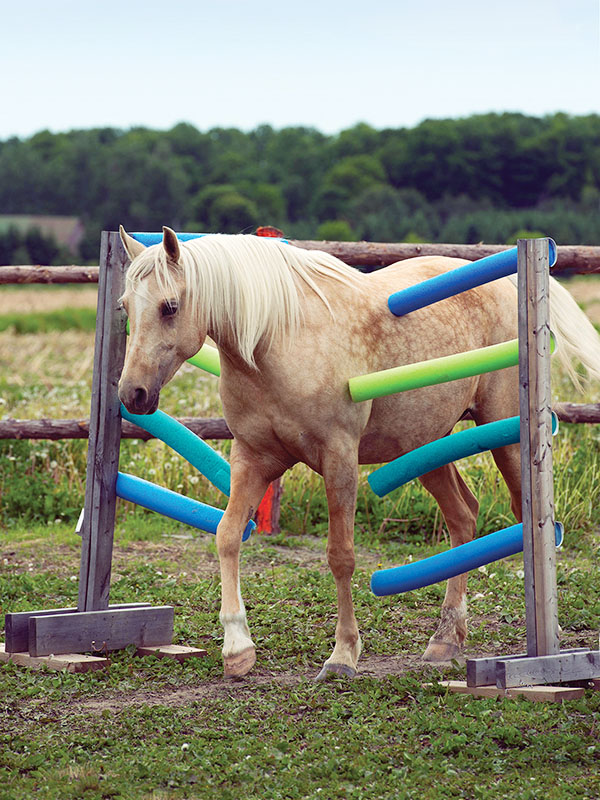
Clicker training can encourage the horse to try new challenging experiences and be more engaged in liberty movement. Photo: Clix Photography
Maybe you’re like me, but I will put in a lot of effort if I know there is a chocolate croissant on the line. However, if someone is forcing me to do something I don’t want to do or feel unsafe doing I typically find myself resisting, trying to leave the situation, or shutting down. If I have a sense that I can say no and be heard, stop when I need to, and choose to move forward at a pace that works for me, all while being rewarded when I’m doing well (preferably with chocolate), I am a much happier camper.
Related: Get-It-Done Horsemeanship
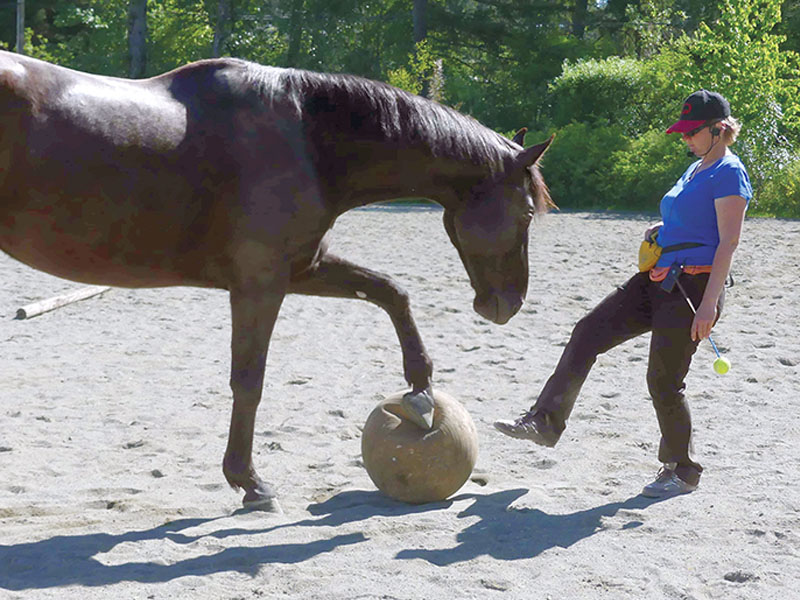
Heather Nelson is asking Skye to lift his foot and touch the ball. She’s demonstrating to Skye what she would like him to do and rewarding him when he does it. Photo: Nicole Jory
This is not to say that positive reinforcement is the only way to go and you should abandon everything you’ve ever learned. I’ll be the first to admit that my horsemanship is a hodgepodge, just like my riding attire, and it’s all about what works for my horses and me. Even though I was training in this way with my younger mare Raven, I resisted using positive reinforcement with my mare Diva for several years. I had previously found her becoming unfocused and pushy with treats around, and what we had been doing up until that point had been working fairly well. I had also fallen into the “an older horse can’t learn new tricks” trap. But there were noticeable gaps in our training that negative reinforcement and pressure only made worse, such as anxiety and reactiveness with new objects or bigger vehicles on the road or trail, walking away from the mounting block, resistance to deworming, and a loss of confidence loading in the trailer on her own. These small but important gaps highlighted a lack of confidence and trust in me and in her environment, and difficulty feeling safe and therefore curious in certain situations.
When I finally tried clicker training with Diva it was a game changer. Many people don’t attempt this type of training because they are scared that their horse will become food aggressive with hand feeding. The shift for us was to set up manners about the food rewards right from the start and lower their value by using things like hay cubes, pellets, or even hay. Doing so reduced both the intensity around treats and the sugar intake. Now if my horse shows a big try, or at the end of a training session, I can give a high value treat (such as carrots or apples) to let her know I appreciate her effort. You can also work with your rewards in feed buckets if you really can’t get behind hand feeding. And yes, I have a treat fanny pack that makes me look even cooler than ever at the barn and out on the trail. In the Resources section below, I’ve included a great article from the Willing Equine, which shares how to set yourself up for success as you start learning to do clicker training.
The other critical shift was learning about target training, where the horse is asked to touch a target object with her nose, and clicked and rewarded when she does. The target can be as simple as a short stick with a foam or tennis ball at the end, or even a pool noodle (although these can be wiggly!). This training can then be applied to a variety of different situations, like touching the target to ask for a bend or a turn on haunches, teaching a horse to stand and tie with a target object tied to your fence or trailer, or moving your target closer to a new object and rewarding with each brave step. This type of clicker training supports both my mares in developing their curiosity with new and scary-to-them objects, as well as happily standing still for hoof trimming and mounting without pressure. You can even use your dewormer tube as a target, because wouldn’t it be nice to be able to deworm with no stress on either you or the horse?
Related: Do Equestrians Know How Their Horses Learn
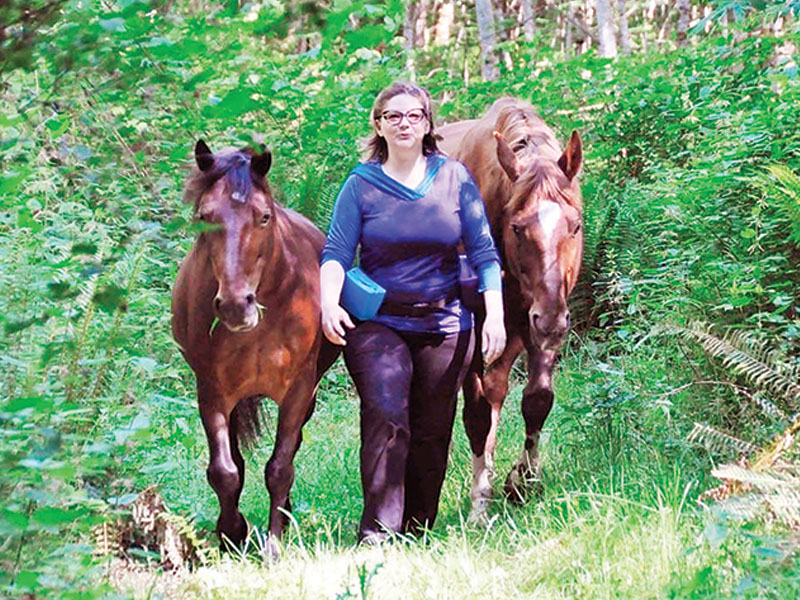
Heather Nelson is working at liberty using clicker training with her horses Extra and Sailor. Photo: Saskia Kelly
On that note, this type of training can be your best ally in situations that require first aid, veterinary care, or trailer loading. It can support your horse to prepare for and be more relaxed at farrier appointments, and during saddling and mounting; to be more engaged in liberty training; and to be more excited and interested to try out novel and challenging movements by invoking an intrinsic desire to play.
As a beginner myself, I am not going to explain the specifics of how to begin clicker training with your horse, but I will give you some resources to start you off well. I highly recommend finding an instructor who can offer feedback and support through this learning process. Any new method takes time, practice, and support to develop your timing and feel. Clicker training is no exception, but Diva and I can attest to its worth as a valuable tool in your training toolkit.
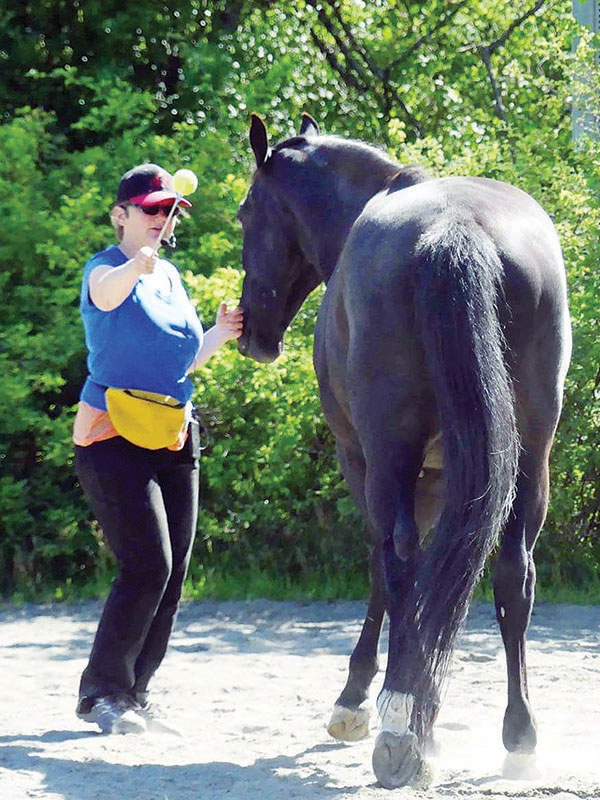
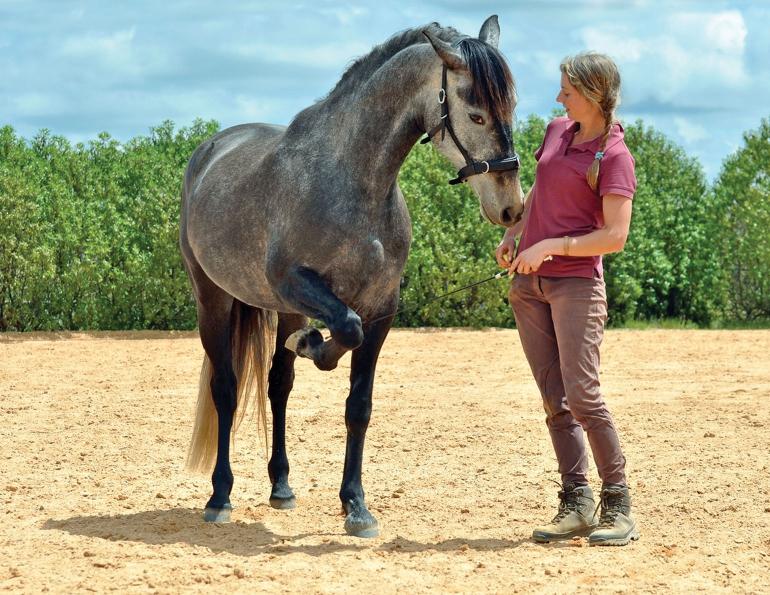
Using clicker training for lateral work, Heather Nelson asks Skye to move his hip toward the target for a reward and uses her hand as a target to maintain a bend through his body. Photo: Nicole Jory
As easy as it might seem to stick to a longtime or traditional training method, my hope for each of us as horse people is that we continue to learn and grow alongside our horses. Trying out new skill sets, even if we might be awkward and ineffective as we begin, can grow our own neuroplasticity, encourage play and curiosity in ourselves and our horses, and improve connection with our horses. Clicker training is a fun and relatively simple way to improve your horsemanship and shift your thinking about training horses, whether you decide to use it all the time or as part of your relational experience with your horse.
Enjoy!
Resources:
- Article Clicker Training: How to Get Started from the Willing Equine
- Connection Training - Hannah Weston (target training speciality, membership program, book, fun and easy to follow YouTube videos)
- Heather Nelson (Vancouver Island based R+ trainer - does online training sessions) –
- Emotional Horsemanship with Lockie Phillips - (online course on using intermittent rewards, does online training sessions)
- Instagram accounts to follow: The Willing Equine, Connection Training, Emotional Horsemanship, Hanna and the Horses
Related: The Power of Play with Our Horses
Related: A Conversation with Animal Behaviour Expert Dr. Temple Grandin
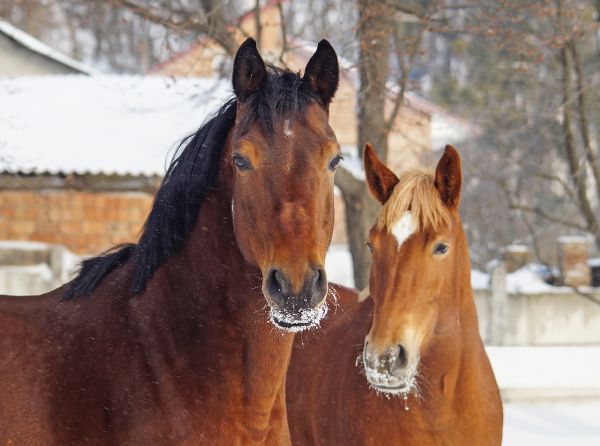
Main Photo: Dreamstime/Rk8tp18
Blogs & Podcasts

Advertisement

Related Articles
Advertisement

Featured Stories





Advertisement