19 Articles

over-training horses, overtrain injury horse, preventing injury in horse, am i working my horse too hard, acera insurance, horse insurance for horses

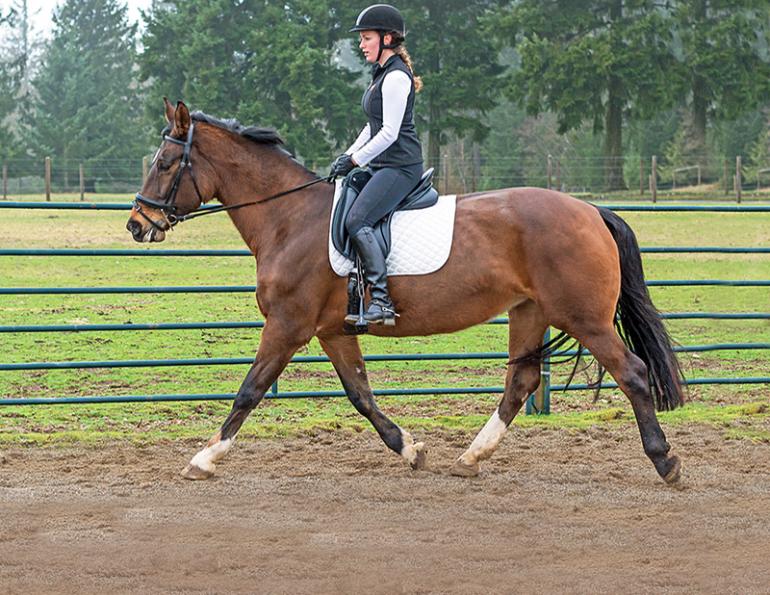
Well-meaning riders are understandably concerned about ensuring their horses are fit enough for their jobs. But in the drive for competitive results, it’s easy to over-practice and over-train horses — by simply doing too much work and not providing enough rest and recovery days in between.

herbs for horses, reducing inflammation horses, oa horses, osteoarthritis horses, spirulina horses, blue green algae for horses, natural supplements for horses, scientific studies horse supplements

Inflammation generally gets a bad rap. With all that pain and heat and swelling and such, it is tempting to enthusiastically declare inflammation as something that should be unconditionally avoided. While persistent, uncontrolled inflammation often does contribute to a decline in health and tissue function, transient inflammation (such as that resulting from exercise) may be essential to appropriate adaptation of tissues to stress. So, before we announce a universal ban on the ouch factor, let’s take a closer look at inflammation, and explore how a nutraceutical might promote the “good” while inhibiting the “bad.”

stomach Bots, equine tapeworms, bot flies, Dr. Wendy Pearson, University of Guelph, larvae pupate, horse care, Seasonal Parasite Control

Stomach Bots and Tapeworms - Your parasite management program should give some attention to stomach bots and tapeworms. To control these parasites more effectively, it helps to understand their life cycles.

how to clip horse's tail, grooming tail of horse, using clippers on horse

Clipping is one of those jobs that many horse owners despise — it’s messy, time consuming, and too often can be stressful for both horse and owner. But you don’t have to dread clipping your horse. If you know how to use the clippers correctly and keep the horse calm and relaxed throughout the experience, you can end up with a horse that looks like he’s been to the groomers, rather than just having survived a fight with a lawnmower.

Diseases with Horse-to-Human Transmission, Can you get a disease from your horse? Ringworm horses, equine Rabies, Anthrax horses, diseases horses housed livestock, horses poll-evil, diseases equine veterinarians can catch from horses

The short answer is yes—but the encouraging news is that direct transmission of disease from horses to humans is quite uncommon. Still, it’s important to be aware of several bacterial, fungal, parasitic, and viral infections that can, in rare cases, pass directly from horses to people. This overview excludes conditions like West Nile virus, which are not transmitted directly from horse to human but rather through intermediate sources like mosquitoes.

confident in saddle, nervous on a horse, staying calm on horse, how to get horse pay attention, equestrian psychology, Annika McGivern, how to enjoy riding horses

What do you believe is more important in our work with horses: knowledge or curiosity? It’s easy to see why knowing the answer is desirable, but valuing knowledge over curiosity can create pressure, frustration, and low confidence. Not being able to use curiosity as a mental skill can cause us to wind up in never-ending cycles of frustration and perceived failure in our journey as equestrians.

jec ballou, conditioning horse, training young horse, exercising horse, jec ballou exercises, ground pole exercises

Should young horses be left in pasture to grow up or brought in to begin their training? While arguments can be made in favour of each plan, the ideal approach is actually somewhere in the middle. In order to enjoy athletic lives later on, youngsters do need regular exercise, but the structure of their training should differ from that of a mature horse. Primarily, it should be shorter, slower, and avoid concussive skeletal forces.

horse rider injuries, accident-prone horse rider, alexa linton horse person, how to help an injured horse rider

Your Road Map to Recovery - Those with hands-on horse experience run into a few unavoidable realities: horses get hurt, riders get hurt, and sometimes the injuries go both ways. Horses can unintentionally harm people, and riders — despite their best intentions — can contribute to a horse’s discomfort or injury.

tom durocher monty roberts certified instructor, monty roberts learning center, eal canada, painted warriors boot camp, painted warriors ranch

Bringing a fresh perspective to the world of horses - In his work with horses and riders, Monty Roberts Certified Instructor Tom Durocher goes far beyond “horse whispering.” He helps people gain a deeper understanding of horses, and reinforces the importance of connection and the relationship with their horse.

bears horse riding, bears and horses, how to handle bears while horseback riding, tim mearns, painted warriors horseback riding backcountry bootcamp

Tim Mearns teaches bear awareness and wildlife safety as part of the Horseback Riding Backcountry Boot Camp. He imparts essential knowledge for anyone venturing into the backcountry. Basics are key, including proper handling of food, using bear-resistant pack boxes, knowing how to use bear spray and having it ready to go at an instant’s notice. Equally important is understanding bears and what is important to them, such as the changing of the seasons and the types of environments they prefer. In the spring, for example, females will be out and about with cubs, and in the autumn bears are intensely focused on food and fattening up for winter.

kispiox valley rodeo joy allen, bcra joy allen, british columbia rodeo association joy allen, riding kids' camps

British Columbia Rodeo Royalty - Rodeo royalty does not always wear a crown. Joy Allen of Hazelton, BC never donned the tiara or chaps of a rodeo queen, but her passion for rodeo and its traditions has inspired many cowboys and cowgirls and has ensured they have the opportunity to take part in the best rural rodeos in Western Canada.

regenerative therapy equines, equine musculoskeletal disease, abps horses, dechra equine, provet apc, platelet rich plastma horses, therapy for lame horse

Musculoskeletal disease is a widespread problem, especially in performance horses. Fortunately, it does not have to be a career-ending disease. Regenerative therapies are revolutionizing equine health care, offering versatile solutions for a wide range of conditions. From promoting tissue regeneration to supporting overall health, these cutting-edge treatments are transforming the way we care for our horses.

sport horse performance injections, dr. william hodge veterinarian, treatments for horse joints, pain horses, pain meds horses, adequan, cartrophen vet, legend

We ask a lot of our equine partners. Regardless of the discipline, maintaining optimal joint health is essential for any horse’s performance. Horses are athletes and lameness is one of the most common reasons for decreased performance. By addressing lameness issues as soon as they develop, the impact on the horse’s career can be minimized. Joint disease in horses is very common and as such, the use of one or several therapies can maximize soundness and improve long-term joint health.

five rein aids horses, bearing rein aid, , opening rein aid, pulley rein aid, indirect rein aid, direct rein aid, riding horses rein aids, sarah mellings, ec certified coaches

Whenever I coach a new group of riders at a clinic or in a lesson, I am always surprised at how few people can tell me the five different rein aids and the purpose of each. Therefore, it is always a question I like to throw out to the group. I usually see people looking down and moving their hands around, some vague stares, and the occasional rider being able to describe at least one or two of the five.

how to plan emergency horses, burwash equine services, dr. crystal lee burwash, ultrasound for horses, physical exam horses, abdominal tap horse, nasogastric tube horse, puncture wound horse

Plan ahead and know what to do when the unexpected happens - If you own horses, you will experience an emergency with them at one point or another.

wild horse nutrition, helping wild horses, feeding wild horses, hwac, horse welfare alliance of canada

What makes a deed good? Is it good intentions or is it good results? Or are both elements required for a deed to qualify as good? When it comes to the “wildies” (loose, wild, and feral horses), some people turned their good intentions into action by putting out feed for the horses wintering on the eastern slopes of the Rocky Mountains.

Karen Rohlf riding bitless, dressage naturally karen rohlf, grand prix dressage competitor trainers, interview with Karen Rohlf, riding dressage without bit, natural horsemanship dressage

There’s a reason some call it “stressage.” Like ballet, dressage is an art form that balances grace with strength and athleticism, a feat demanding extraordinary mastery of the body. Unlike ballet, in dressage that feat is dependent on cooperation between members of two different species — cue the stress! And when riders are stressed, so are the horses. As a result, riders sometimes turn to dubious methods in an attempt to gain control of their equine partner.

fort Walsh, Grasslands National Park, horse trail, trail riding, saskatchewan trail riding, prairie trail riding, horse camping

Horseback riding through the vast, sunlit prairies of Saskatchewan, with the possibility of encountering a herd of wild bison, was a long-held dream that drew me to this stunning part of Canada. However, it wasn’t until enduring a six-month-long snowy winter in Terrace, BC, that I finally turned this dream into a reality.

riding horses middle-age, older person wants to ride horses, how to start riding horses senior, grit high dressage,lorraine laframboise equestrian, sandra sokolosky riding horses

The 21st Century Rider - Many Canadian riders are throwing their leg over horses well beyond the age when others are pursuing more sedentary activities. For example, about 19 percent of Alberta Equestrian Federation members were over the age of 56 from 2015 to 2018. In British Columbia, approximately 19 percent of active Horse Council BC members were over age 60 in 2018. Meanwhile, in Quebec last year, about 12 percent of Cheval Quebec members were age 60 and over. Nationally, approximately 22 percent of Equestrian Canada sport licence holders were older than 50 in 2018, and 10 percent were older than 60.

karen L. Weslowski, equine waivers, equine liability agreements, Unambiguous Waiver Risk Hazard,

A key risk management tool used to transfer responsibility for injuries from one party to another through written agreement is called a Wavier of Liability (or “waiver”). These are frequently used in high-risk activities such as when riding horses. While frequently utilized in the equine industry, waivers are commonly signed without a clear understanding of their legal purpose or the necessary conditions for them to be enforceable.

Pages