Reining

schooling horses, lindsay grice, how to practice for horse show, beginners exercises horse, side pass horse, trail obstacles horses, horsemanship, riding coach

Do you sometimes yourself leaving the mounting block, fixing your stirrups, and unsure of what to focus on in your next training session? When your coach asks about your progress since your last lesson, do you often admit that you’ve mostly just been riding without a clear goal in mind?

Kendal lehari three-day eventing rider, how to succeed as a horse rider, Canadian equestrian athletes, successful Canadian horse riders, tracy vollman Canada's world equestrian games endurance team, jim greendyk performance horses

Canada is a massive country, with large distances between equine competitions and a relatively small number of upper-level equestrians. Hence, Canadian riders who want to be competitive at upper levels struggle to find enough higher-level competitions to advance their riding careers. Canada also has winter weather that precludes many riders from training outside for half the year. This can limit advancement and horse fitness. For example, three-day event riders can’t school cross-country jumps or get their gallop training in when fields are drifted with snow, nor can endurance riders do long rides on varied terrain.

canadian horse professionals, how to ride horses for a living, how to be a professional horse reiner, how to professional show jumper, how to professional dressage rider

The gap between amateur and professional competitors is common in Canadian sports. Weekend skiers have significantly less skills than athletes on Canada’s ski team. Amateur hockey players don’t make Canada’s Olympic team. It’s the same in horse sports. Tiers of riders have developed as equestrian sports have become more technical. Upper-level horse sports are primarily the purview of professional and elite riders while amateurs play at lower levels.

rhythm horse, cadence horse, reining horse balance, loping the oval reining exercise, lyle jackson horse reiner

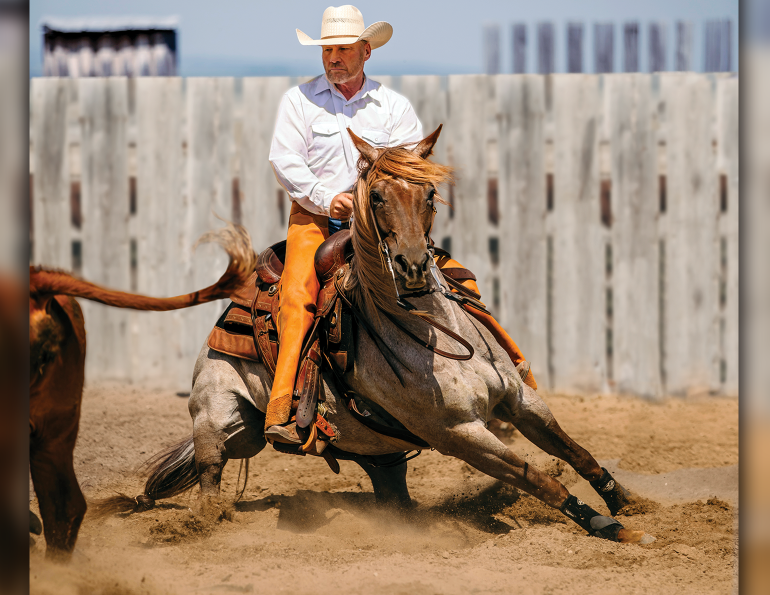
In reining, rhythm, or “cadence,” is necessary when it comes to executing all aspects of a well ridden pattern. The horse should be balanced and responsive while willingly accepting the riders aids which should appear seamless. Establishing a consistent rhythm which can be adjusted accordingly is one of the fundamental building blocks that will assist the rider in achieving the ultimate goal in reining, which is a horse who appears to be executing a flawless pattern without the interference of the rider.

Tina Irwin Working Student Program, Maddy Scott Equestrian Crosby Gold, how to be professional equestrian, successful canadian horse riders

Many youth dream of becoming horse industry professionals — training horses, coaching riders, managing a stable or riding professionally at top level. Significant barriers stymie those attempting to pursue success, regardless of their talent and enthusiasm. There’s no streamlined path to follow that develops the needed horsemanship, business knowledge, training, and coaching skills required of professional riders, barn managers, and coaches.

Equestrian Canada's Coach Licensing Program, how does ec's coach licensing work, requirements horse coaches canada, how to become a horse riding coach

The Equestrian Canada (EC) Coach Status program is part of a collective commitment to safety for human and equine athletes and excellence in instruction and coaching. Standards for earning and maintaining coaching designations help protect athletes, coaches, and our industry.

jec ballou equine trainer, using the long cavesson on horse, equine groundwork, lateral poll flexion horse

Due to its effectiveness in helping the horse carry his body with good form, the longe cavesson is arguably one of the most useful pieces of equipment to own. Yet, only a surprisingly small number of riders who know about it. While early depictions from the 16th century refer mostly to its value in lateral poll flexion, its benefits for groundwork extend to a horse’s entire body. For anyone who performs groundwork it is an indispensable tool, as I will explain. Common misalignments of horses during groundwork include a twisted poll that comes from a handler using a line attached under the chin, or one-sided pressure on the bit when using a bridle. The alignment and state of positive — or negative — tension in the poll directly affects the rest of the body.

jec ballou, horse exercises, dressage training exercises, walking activities horse, walking equine exercises

Many classical dressage masters from the past often praised the merits of long schooling sessions at only the walk. This kind of training refines muscle recruitment, releases tension stored in poor postural habits, and stimulates the slow-twitch fibers used for stabilizing the skeleton. In other words, there is big value in workouts at the walk. And note how I have used the term workouts, since that is how you should think of them. These are purposeful sessions, not strolls.

john swales million dollar club, National Reined Cow Horse Association (NRCHA)

John Swales is the first Canadian rider to win over $1 million in lifetime earnings in National Reined Cow Horse Association (NRCHA) classes and join the prestigious NRCHA Million Dollar Club. Swales earnings surpassed $1 million during the Alberta Reined Cow Horse Association Snaffle Bit Futurity, Derby, & Cow Horse Show in Claresholm, Alberta at the end of August 2023. He’s only the 27th rider to achieve the feat.

schooling horses, lindsay grice, canadian equestrian coaches, horse learning styles, how do horses learn? types of horse training, horse riding lesson plan, communicating with horses

Keys to an effective horse training session. I’ve trained a lot of horses. After nailing up my sign as a “professional horse trainer” several decades ago, I learned quickly that overhead is high in the horse business so you’d better make some hay if you’re going to pay your bills. Consequently, I rode many horses each day, breaking young ones and tuning up show horses.

Pages