


Pressure without Panic - How Equestrian Riders Can Feel More Present and in Control

Updated:
September 9, 2026By Annika McGivern, MSc, Sport and Exercise Psychology
Growing up as a three-day eventer, I spent many minutes waiting to enter the ring or the start box. At times, the nerves felt almost unbearable while waiting to compete. I would find myself thinking about all the money and time I’d invested to get there and how much I wanted to succeed. The thought of making a significant mistake, or failing, made me feel panicked. With hindsight I can now see how the experience of pressure was distracting me and pulling my attention away from the task at hand. Ironically, this loss of focus sometimes contributed to the very mistakes I feared making.
I sometimes think about what I would say to my younger self if I could go back and stand beside her in the warmup ring, armed with everything I’ve learned as a mental performance consultant. I’d love to be able to teach her how to change her relationship to pressure, so that she could feel more present, in control, and even begin to enjoy the highly pressured but also deeply special moments she was experiencing.
Here’s what I’ve learned: Pressure becomes more manageable — and often even enjoyable — when you view nerves as an asset; trust that your skills are equal to the challenge; make room for uncomfortable thoughts and feelings rather than resisting them; focus on what you want to create instead of what you fear; and repeatedly prove to yourself that you can perform effectively under pressure. These are all learnable skills. In this article, we will explore each one and how you can use them to ride with greater presence and enjoyment under pressure. The goal isn’t to get rid of pressure; it’s to become the rider who can perform, learn, and even enjoy themselves when pressure is present.
Related: The Hidden Cost of Perfectionism in Equestrian Sport

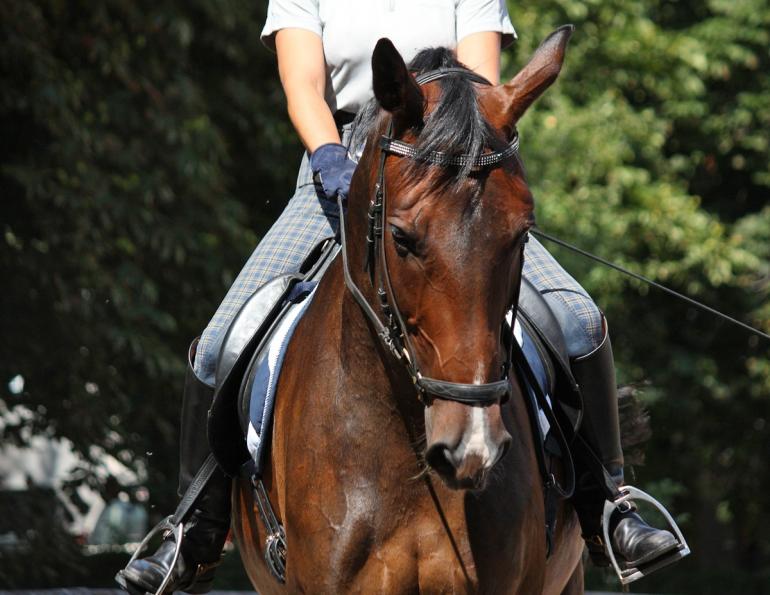
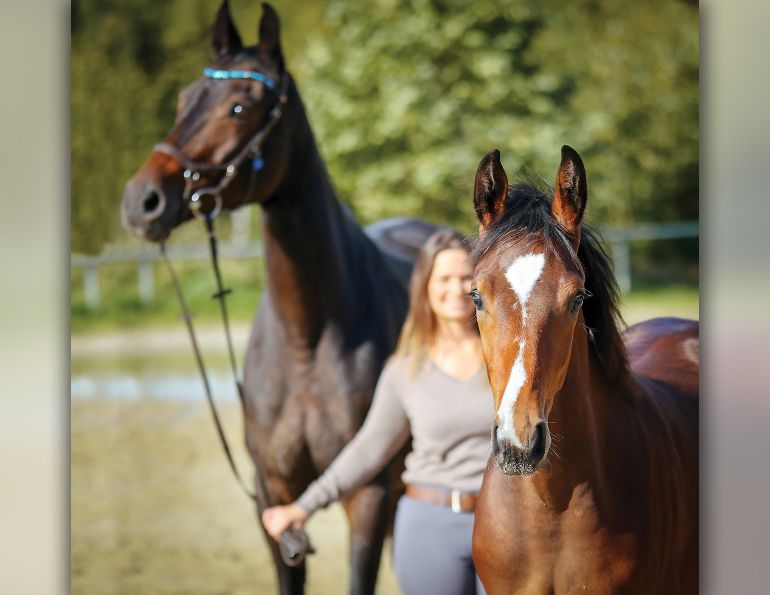
Become a rider who can experience pressure without panic. With practice, high-pressure moments can become opportunities for anticipation, presence, and enjoyment. Photo: Pam Mackenzie
Pressure is not dangerous
When we are under pressure, our nervous system becomes activated, and many riders unconsciously interpret this activated feeling as danger. You experience a racing heart, tight muscles, butterflies, and a busy mind, and you assume that you are losing control, likely to ride badly, have no confidence, or that you are not ready. But your body’s pressure response is designed to prepare you for action. Increased heart rate, alertness, and extra energy are not automatically harmful. It’s the meaning you attach to these sensations that changes everything.
Research shows that athletes perform better when they interpret these sensations as neutral or positive, instead of as evidence of impending disaster. Athletes who do this well use self-talk to reframe the sensation of nerves as a sign that their body is preparing them for this important moment. Feeling nervous becomes a good sign, indicating you are ready to perform.
Pressure isn’t the problem; it’s how we interpret it.
When under pressure, the brain focuses on two questions:
- What is being asked of me?
- Do I have what I need to handle it?
When the task seems to demand more of you than you are capable of, pressure feels threatening. This is characterized by thoughts such as “This course is difficult, and one mistake could ruin everything.” Or “My horse is fresh, and I won’t be able to manage it.” However, when riders can recognize their preparation, skills, options, and support, the same situation is more likely to feel like a positive challenge. In this case, thinking shifts to “This course will test me, but we are ready, and I have a plan.” Or “My horse is fresh, but I can trust myself to manage it. I know what to do.” Interestingly, research shows us that athletes perform more effectively when they believe they have the skill and resources they need to meet the demands of the situation.
Next time you’re preparing for a high-pressure moment, do a resource check by asking yourself:
- What preparation can I trust in?
- What skills can I trust in?
- What can I control?
- How can I respond to a mistake or unexpected event?
- Who is supporting me today?
Related: Understanding Motor Learning for Equestrians - Why Progress in Riding Feels Slow…
Let the nerves come with you
Have you ever thought that if you could only be calm and confident, you would enjoy competing much more? Many riders fight against their nerves, thinking they must banish them to be successful. The problem is that this rarely works and instead you become increasingly anxious about being anxious. This is also potentially distracting, as your focus gets caught up in an internal struggle instead of staying with the task at hand.
The answer is to stop struggling against your internal experience and redirect your attention to present-moment action. In other words, when we accept the feeling of nerves and pay it less attention, we can perform better and cope more effectively with pressure. I often explain this as allowing nerves to stay in the car with you. Shifting your focus doesn’t kick the nerves out of the car, but it does move them into the backseat and away from the steering wheel.
Accepting nerves doesn’t mean liking the feeling or giving up on performing well. It simply means acknowledging that you can still ride well when nerves are present and returning your attention to the task at hand.
Frame the goal correctly
Under pressure, the human mind often focuses on what it does not want to happen. This is called avoidance-focused thinking. This type of focus creates two problems. First, it keeps us focused on a feared outcome, which makes us more nervous. Second, this thinking doesn’t connect us to our skills or problem-solving.
Instead, frame your goals with approach-focused thinking. This means telling yourself what to do, instead of what not to do. This type of thinking gives us the opportunity to name the desired outcome and focus our attention on achieving it. This activates our learned skills and our problem-solving, allowing us to respond quickly and skilfully in the moment to whatever happens.

Related: Equestrian Psychology - Remain Calm and Ride On
Practice pressure
Every opportunity to ride with additional pressure is an opportunity to build the skills that help you manage it. Instead of hiding from high-pressure experiences, seek them out to build confidence. Ride off property, participate in clinics, or ride different horses when possible. Ride with a coach who challenges you appropriately. Go to schooling shows, try other disciplines, or set yourself a big, exciting goal.
Practice is key, but how you practice matters. Don’t just force yourself to experience more pressure unless you’re ready to practice the skills and reflect on what you learn. Reflecting afterwards is essential to capturing what you learned and taking it with you into your next ride. After the ride, reflect on how you handled the pressure, where your attention went, and what helped you stay present and effective. Think about what you will repeat in your next ride and what you learned about how to manage pressure.
The goal isn’t to make pressure feel comfortable; it’s to make it feel familiar. Confidence grows when you repeatedly experience handling pressure successfully. Start by creating manageable challenges rather than overwhelming ones. As your confidence grows, gradually increase the level of pressure so you’re stretching your skills without becoming completely overloaded.

You don’t have to eliminate your nerves to ride well — you just have to stop letting them take the reins. Confidence grows when you learn that you can perform well even when nerves are present. Photo: Pam Mackenzie
If I could go back and stand beside my younger self in the warmup ring, I wouldn’t tell her to stop being nervous, or that the feeling of pressure would one day disappear. Instead, I’d remind her what the nerves mean — that this moment matters. I’d help her remember all the preparation and skills she has available to draw on. I’d let her know it’s okay to let the nerves come along for the ride, that they’re there to help as long as we don’t hand them the reins. Then, I’d ask her a simple question to help her frame her goals for the ride with approach-focused thinking: What do you want to create out there?
The goal is not to become a rider who never feels pressure. The goal is to become a rider who can experience pressure without panic, trust their preparation, accept uncomfortable feelings, focus on what they want to create, and see every competition as another opportunity to strengthen those skills.
High-pressure moments like those spent waiting to enter the show ring may never feel completely comfortable, but they can become moments of anticipation, presence, and even enjoyment. When that happens, you stop trying to survive the pressure and start experiencing the magic of the very moments you and your horse have worked so hard to earn.
Related: Harnessing the Power of Visualization in Equestrian Sport
Related: Goal Setting for Equestrians: Become the Horse Rider You Aspire to Be
Photo: Clix Photography

Blogs & Podcasts
Advertisement

Related Articles




Advertisement

Featured Stories




Advertisement
