

Horse Expo Canada’s Elite Horsemanship Summit
Updated:
May 14, 2026Balancing results while doing right by the horse
By Tania Millen, BSc, MJ
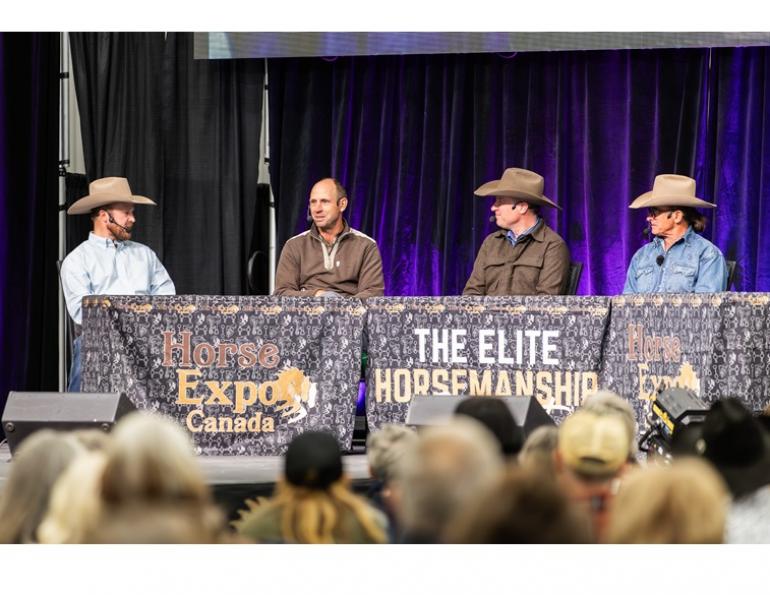
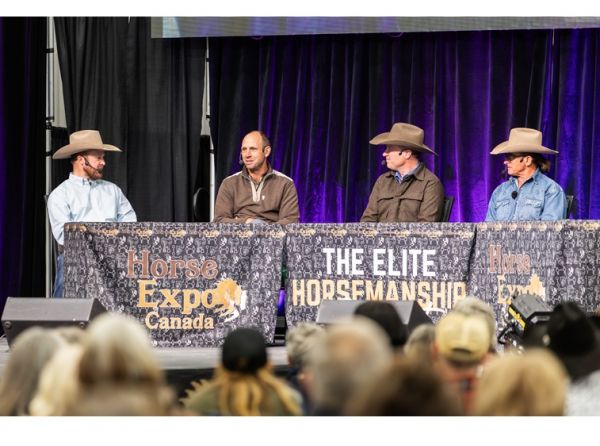
Over 500 rapt horse lovers sat and listened to the two-hour-long Elite Horsemanship Summit at Horse Expo Canada in Red Deer, Alberta on April 24, 2026. Summit organizers Elisha Bradburn and Kylie Bartel hosted the discussion with Jonathan Field, Josh Nichol, Tik Maynard, and Warwick Schiller.
The topics were “balancing results while doing right by the horse” and “navigating between connection and control.” Maynard and Schiller were particular draws, with spectators coming from as far as Ottawa, Ontario to hear their wisdom.
The four presenters sat at one table on a large stage within The Westerner complex, while the hosts sat alongside. A headshot of the speaker was displayed on a large overhead screen. As the Summit began, the conversational din died and attendees focussed on what the four men had to say.
First, the horsemen introduced themselves.
Field has been attending this expo – formerly The Mane Event – since its beginnings about 20 years ago and is well known in British Columbia and Alberta for his horsemanship teachings.
Nichol is based in northern Alberta and has built a reputation for helping people learn to relate to their horses. More recently, Nichol says that his kids have started rodeoing, and his own horse journey has been rejuvenated while navigating that arena.
Schiller is best known for his podcast interviewing horse industry experts who are pushing the envelope in equine understanding. He’s also a popular clinician; horses and humans respond to his quiet confidence.
Maynard was less known to many. He grew up in Vancouver’s Southlands horse community with well-known horsey parents; has a Pony Club background; has won Road to The Horse (RTTH) World Championship of Colt Starting twice; and has written two successful books about his horsemanship journey.
Related: Ontario Equine Expo Grows in Second Year
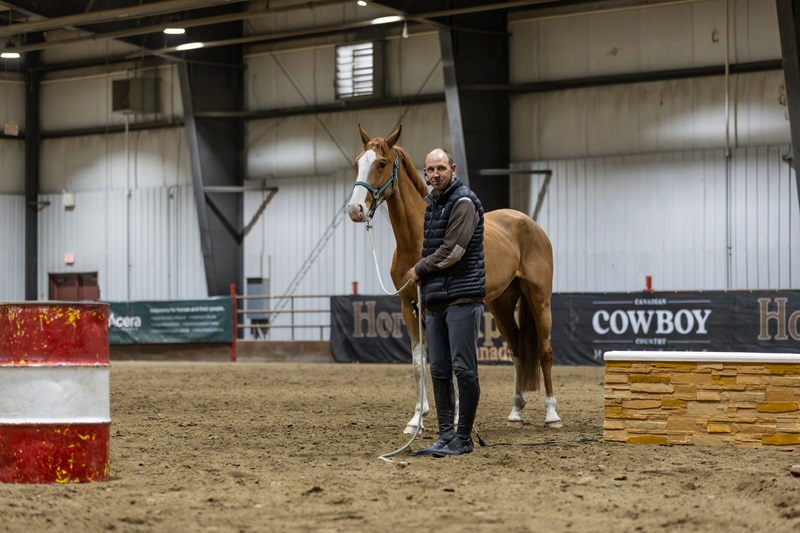
Tik Maynard’s clinic sessions covered jumping and starting the young horse. Photo: Krystina Lynn Photography
All the men knew each other and their banter lightened reflective responses to serious questions.
Here’s a summary of their discussion:
1. Safety, Emotional State, and the Human’s Intention
Across the board, the horsemen agreed that you cannot get good results from a horse that does not feel physically or emotionally safe.
Schiller was the most explicit. He said there are two types of safety — horses must feel safe with you, not just safe from you — and only relational safety allows training to progress. He emphasized noticing small signs of stress early because “Horses notice when you notice.”
Nichol echoed this through his mentorship lens. He said, “Horses are not being difficult. They are worried, confused, or trapped.” Nichol’s priority is to hold space for the horse and bring them from worry into calmness so they can think. He said, “If you want to know where you’re at, just listen to the horse and they’ll tell you.”
Field added, “You must make the time to settle them so they start emotionally correct,” because emotional readiness determines whether training can be understood.
Maynard reinforced that your intention and emotional state matter as much as your technique. He said, “You must change yourself before you can change the horse.”
Unified message: Before you ask for anything, check the horse’s emotional state as well as your own. Connection begins with safety, and control only works when the horse feels safe enough to follow your directions.
2. Microsteps, Shaping, and the Art of Not Getting Stuck
All four speakers stressed that progress comes from small, achievable steps, not big heroic moments.
Maynard was the clearest. He said that in high‑pressure environments (like RTTH), you need to train using exceptionally small steps or “very thin slices,” so that you never get stuck. He explained that when training at home, you may break down an exercise into 10 steps. But when pressure is high, each of those single steps may need to have its own 10 steps.
Schiller reinforced this idea, stating that we need to reward tiny improvements, and avoid mixed signals that crush confidence.
Nichol added that when something goes wrong, don’t ask “How do I fix the horse?” but “What did I miss?” The missed step is usually smaller than you think.
Field warned against getting lost in perfectionism. Small steps matter but taking small steps that don’t have a purpose can limit results. (More on that in 3, below).
Unified message: Break tasks into tiny steps, reward often, and adjust quickly. Results come from clarity and shaping, not pressure.
Related: Finding Paths to Success for Equestrian Youth
Related: The Science of Schooling Horses
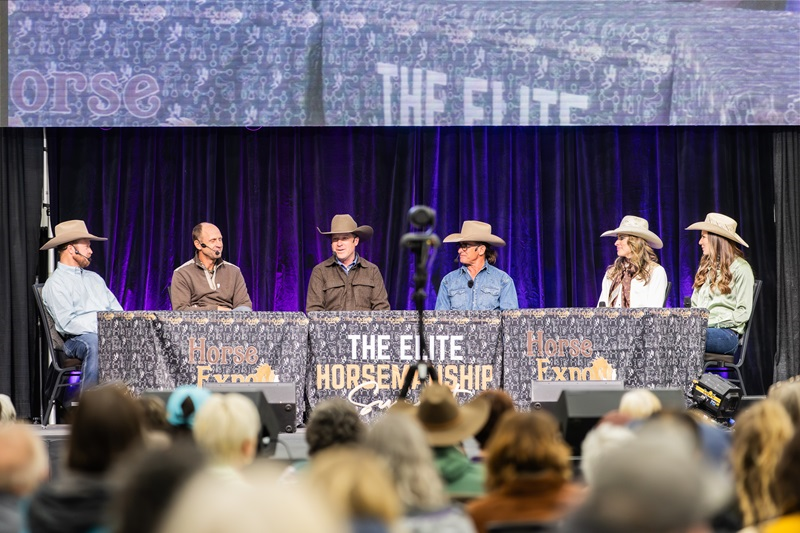
L-R: A glimpse of the overhead screen is shown at the top of the photo. Photo: Krystina Lynn Photography
3. Purpose, Partnership, and the Sweet Spot Between Comfort and Challenge
Field emphasized that purpose transforms training. He said, “The quicker you get to purpose with the horse, the more you can layer on, faster.” Purpose turns training from something done to the horse into something done with the horse.
He also described the sweet spot — the zone where the horse is challenged enough to learn but not overwhelmed. Asking too much or too little limits learning.
Nichol called purpose the glue that keeps connection intact during difficult challenges like obstacle courses, cow work, or navigating a cross-country course. Without purpose, the relationship can drift.
Schiller framed this as the connection–rupture–repair cycle. Training naturally creates ruptures but stepping back to repair that rupture builds trust and keeps the horse in the sweet spot.
Unified message: Define the purpose of your session, stay in the horse’s comfort‑challenge sweet spot, and use rupture‑and‑repair to maintain connection while still progressing.
4. Mentorship, Stewardship, and the Human’s Responsibility to Grow
All four speakers agreed that good horsemanship is as much about who you are as what you do.
Nichol described the human’s role as mentorship: empowering the horse to be calm and confident. He said, “Our job is to help them grow,” and emphasized sorting out your own emotional baggage so that the horse doesn’t have to carry it.
Related: Turn Pushy Horses Around with Three Simple Lessons
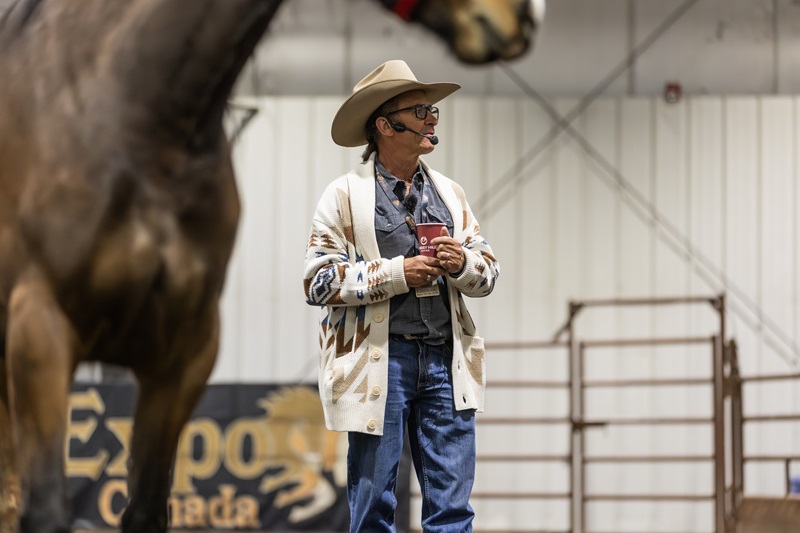
Warwick Schiller’s sessions at the event covered horsemanship and problem horses. Photo: Krystina Lynn Photography
Field described the human as a steward, responsible for the horse’s long, healthy life and for not getting in the way of their learning.
Schiller said that your intention behind an action determines whether it helps or harms the relationship with your horse. He noted that great horsemen succeed because they bring less internal “stuff” to the relationship.
Maynard added that horsemanship and performance are not separate worlds. Both require self‑awareness, preparation, and a willingness to learn from pressure.
Unified message: Balancing results with doing right by the horse starts with your own growth. Horses thrive when humans mentor and lead with clarity and emotional responsibility.
Final Takeaways
All four horsemen agreed that connection and results can be achieved while doing right by your horse.
- Begin by assessing safety and emotional readiness for both yourself and the horse.
- Lead like a mentor, not a dictator.
- Use tiny steps and frequent reinforcement to build clarity and confidence.
- Train with purpose and stay in the sweet spot between comfort and challenge.
The two-hour Summit was met by resounding applause from an appreciative audience, who had received valuable nuggets for their own horse journeys.
Related: Another Win for Tik Maynard at 2025 Road to the Horse
Related: Becoming a Horseman: What Does it Mean Today?
Main Photo: Krystina Lynn Photography
Blogs & Podcasts
Advertisement

Related Articles


Advertisement
Featured Stories




Advertisement