


The Distracted Horse: Building Focus Inside and Outside the Arena
Updated:
February 26, 2026By Jonathan Field
He’s attentive and responsive inside the arena, yet the moment you head out on a hack he seems to lose concentration.
On his own he works beautifully, but introduce other horses and suddenly his focus drifts elsewhere.
He’s relaxed when his field companion is close by, but try to separate them and he becomes anxious and unsettled.
At times he feels completely connected — and at others it is as though you are invisible.
If any of these situations sound familiar, you are not alone. Many riders struggle with what I often call the “tourist horse” — the one whose attention is everywhere except where it should be. Understanding why this happens is the first step towards creating a more focused and reliable partnership.
Through years of presenting at horse expos and conducting clinics, one recurring concern stands out above the rest: riders want to know how to gain — and maintain — their horse’s attention.
To address this issue, it helps to consider the horse’s natural instincts. Horses are prey animals, wired for vigilance. When placed in unfamiliar surroundings or separated from the comfort and security of their herd, they may struggle to feel settled. In these moments, their awareness expands outward as they scan the environment for potential threats or attempt to relocate their companions. Instinct drives them into a heightened state of alertness — a survival response. Our responsibility as riders is to help the horse redirect that focus inward, so that he finds reassurance and leadership in us, much like he would from a trusted herd leader.
Most riders have experienced sitting on a horse who is physically present yet mentally somewhere else. It is the horse who grows tense on a hack when another horse moves ahead, or who quickens his steps when pointed towards home. Although his body is beneath you, his thoughts are not.
Developing consistent attention is not about reacting to a single frustrating episode. It stems from the standards we set and the habits we build each day. The foundation is laid in ordinary moments, not dramatic ones.
Your horse’s focus should remain with you whether you are unloading at a new venue, leaving the arena at home, riding near other horses, or simply handling him in the yard. If he is frequently disengaged during routine interactions, how will he respond when genuine pressure or uncertainty arises? Establishing dependable attention in everyday situations prepares both horse and rider for more challenging ones.
What does it look and feel like to have your horse’s attention, and how do you get it? To help explain, I’ll share the story of a rider and horse at one of our horsemanship camps at our James Creek Ranch. The horse is a mare named Diva. She is owned by Eunice, and it was their first time in the wide open spaces of a working ranch. I don’t think Diva blinked once during her entire first two days after arriving at the ranch. There were a whole lot of new things for a “city horse” to look at – cattle, horses, large open pastures, and even the odd deer or bear passing through.
When we started on our first group ride to the upper meadow, the look in Diva’s eyes intensified and she became a lot for Eunice to handle. The first part of the ride was not fun for either of them. And just before things began to escalate, I asked Eunice if I could ride Diva and show her and the group how to deal with the situation. She gladly threw me the reins!
Other riders that day were dealing with similar emotions in their horses. Fortunately, this meadow is only a short ride from the home ranch, allowing me to stop and help the riders get this issue resolved before carrying on. My goal is to help everyone feel safe so they can enjoy their ride.
Related: Helping the Tense Horse
When I mounted Diva, my intention was to help her in that moment, but most importantly to help Eunice and the other students understand what to do, and to keep it up so they don’t lose the connection a little while later.
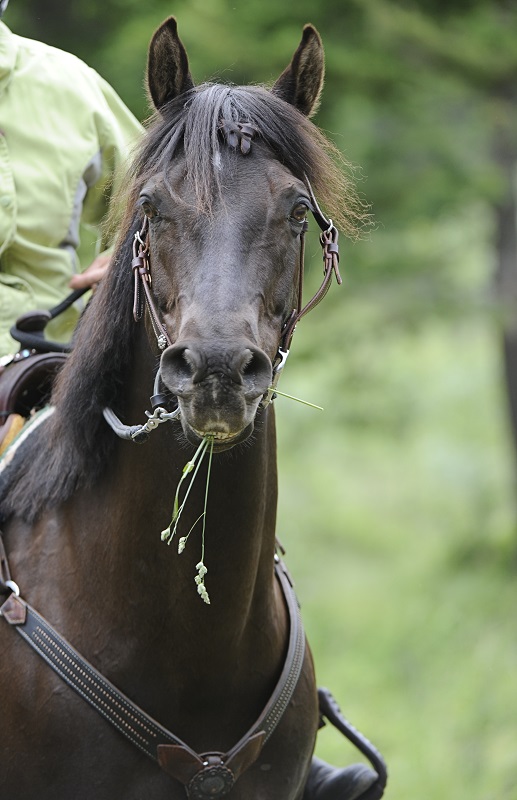
Here you can see Diva was very disconnected from her rider, Eunice. She was distracted – looking at everything, grabbing a bite to eat along the way, and just not focussed on her rider. I don’t like to see someone riding a horse like this in any environment, and even more so out in the open. Things can happen so quickly out there that next thing you know the horse is bolting home with or without the rider! Photo: Robin Duncan Photography

As soon as I mounted Diva, I focussed on where I wanted to go, thinking of a very clear path at a forward trot on a small to medium size circle. To help me be clear with my focus, I picked a bush to trot forward around. She was fast and pushing on the bit, ears with me then not with me, and trying to pull back towards home on the circle. Sound familiar? Photo: Robin Duncan Photography
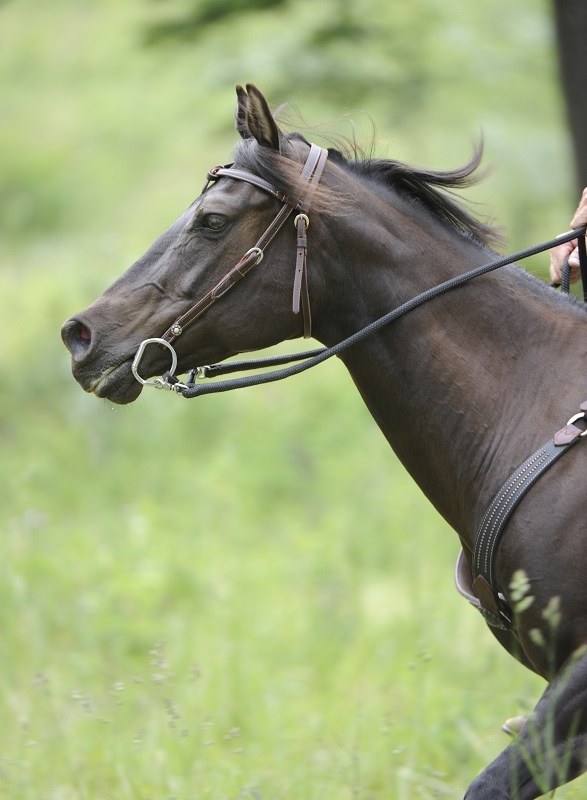
Here you can see she was everywhere but with me. Head up, rough to ride, and braced. Not a fun ride, and not safe either. Photo: Robin Duncan Photography
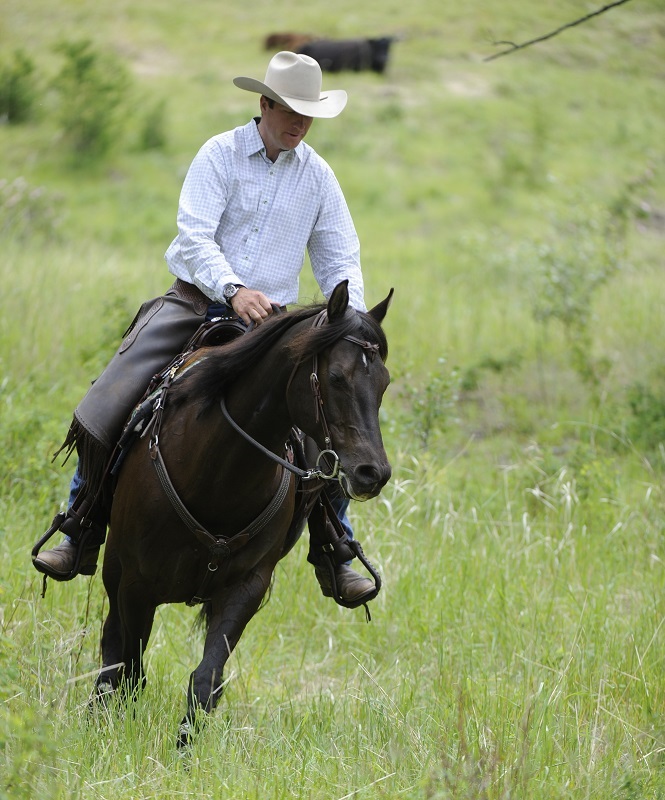
Making sure to go both ways, I kept her on this circle and now asked her to bend a bit, and touched my inside leg and rein now and then until her inside ear and eye looked back at me. She had to give me her attention before I could get her to relax and accept my direction. At this stage I expected her attention to come and go. She would look at me and then away from me, but by persistent circling left, circling right, continually focused, even bumping the inside rein now and then, I insisted she take a look at me. Then I released and allowed her a moment to realize that being with me was a good thing, a focal point for her. Photo: Robin Duncan Photography
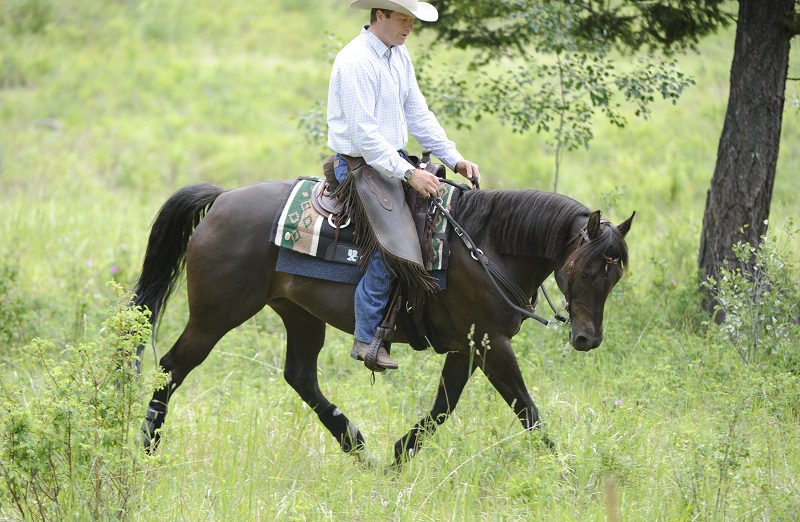
After only a short time the change was starting to happen. The nice horse Eunice remembered from home was returning. It is important to note that while doing this you should not have constant tension on the reins. If the rider pulls the horse will pull harder, and this can become dangerous as the horse braces against the rider and the brakes get burned up. By asking for the eye and ear, then the path, the speed, the bend and the balance, followed by releasing the rein aids, Diva had a chance to relax and think for herself. Photo: Robin Duncan Photography
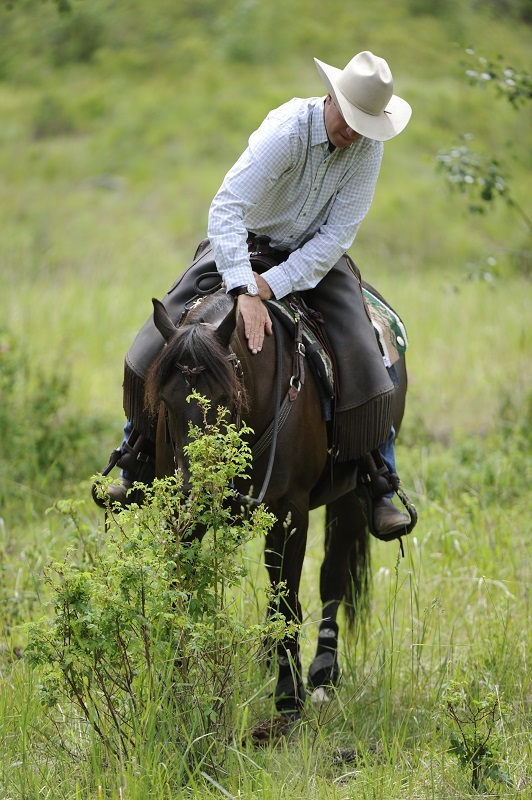
Now it’s time for her first reward and rest. I found a nice change in Diva so I rewarded her by going to the centre of the circle and resting her nose over the very bush we had been circling. This circling program was taught to her back in the arena at home. Resting there now allows her emotions to come back down and connect with her rider. I moved on to other things only after this was working in the small world around this circle here. Photo: Robin Duncan Photography
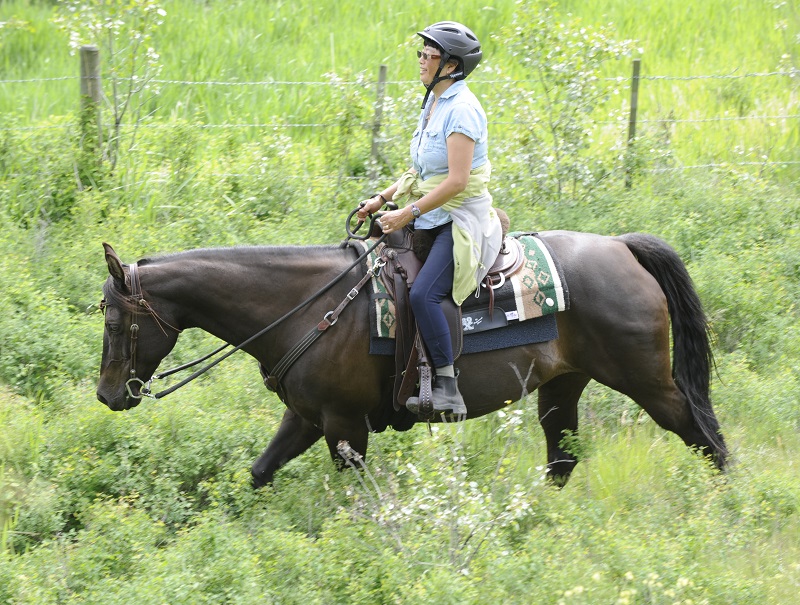
The best part of the whole day for me was when Eunice got to enjoy her horse on our beautiful ranch. And even better was knowing she had the skills to reconnect with Diva if need be. Photo: Robin Duncan Photography
Attention Please!
I have no problem with a horse looking out and checking out his surroundings. That’s natural. The issue is when I can’t get his ear or eye back to me. When that happens I don’t have a connection, and things can become out of control in a hurry.
Even when you’re home in the arena, learn to be continuously aware of when your horse is looking around. Ask yourself: Is the horse looking and can you get his attention back? Or is he looking and is his attention completely gone!
If the horse is looking and his attention is completely gone, go back to the programs and the patterns he knows, bump the rein, tap your leg, go so far as to completely stop all forward activity to disengage the hindquarters. Boss him around and get his feet moving where you need them to be until he begins to pay attention again and focuses on you. I will also do this if I think it’s simply a leadership issue and a horse is just not interested in what I’m doing as much as he’s interested in his surroundings. My goal is to prove to my horse that I do have some plans in mind that he needs to hear me on.
After all, I am riding a horse that can bolt and take me over a bank or into oncoming traffic. It’s serious if I can’t get his attention on me.
Related: Back to Schooling Horses - Mistakes, Mishaps, and Misbehaviours
Related: Rethinking the Pace of Horse Training: Why Slower Often Means Smarter
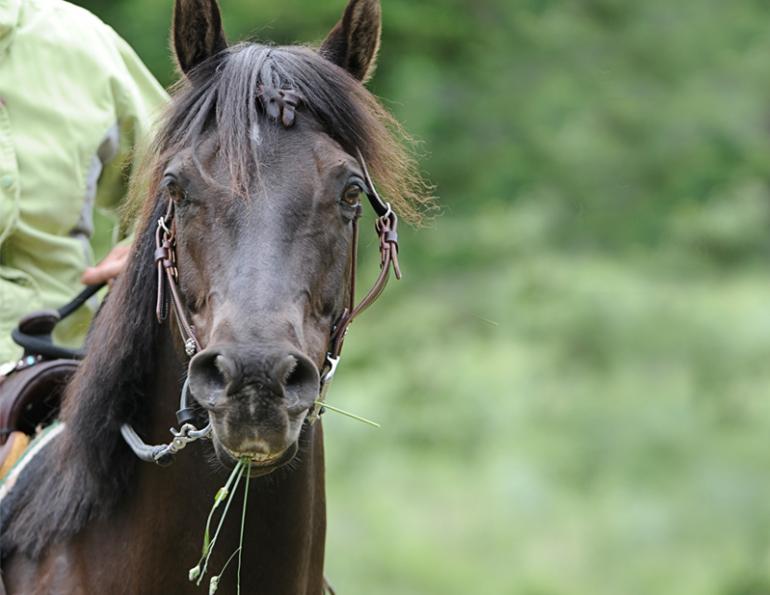
Main Photo: Robin Duncan Photography
Blogs & Podcasts
Advertisement

Related Articles
Advertisement

Featured Stories






Advertisement
