


Feeding Horses Through a Canadian Winter: Nutrition, Hay, Hydration & Cold Weather Care

Updated:
September 30, 2026By Madeline Boast, MSc Equine Nutrition, PAS
Canadian winters can be challenging for horse owners. Bitter cold, fluctuating temperatures, and heavy snowfall all affect a horse’s nutritional needs. Adopting the right feeding strategy for winter months can help your horse maintain a healthy weight and reduce the risk of health problems such as impaction colic.
Understanding the Lower Critical Temperature
Before deciding when to begin making nutritional changes for your horse, there are a few key terms to understand, starting with the thermoneutral zone. The thermoneutral zone is the environmental temperature range in which a horse does not have to expend additional energy to maintain their body temperature. The lower end of this range is referred to as the “lower critical temperature” (LCT). Once the temperature falls below the LCT, a horse will begin using additional energy above maintenance requirements to stay warm.
However, not all horses have the same LCT. Breed differences and individual variables, such as age and body condition, will impact a horse’s LCT, so every horse should be treated as an individual.
Most healthy, mature horses that are accustomed to living in Canada have a LCT around minus 15 degrees C (5 degrees F). Once the temperatures drop to this level, the digestible energy (DE), or calorie, requirement of the horse will increase by about 2.5 percent for every degree below the LCT.
For example, a 500 kg horse that is consuming 2 percent of its bodyweight daily of average quality hay (DE = 2 megacalories per kilogram [Mcal/kg] on a dry matter basis1) has a calorie intake of 20 Mcal/day. If the horse’s LCT is minus 15 degrees C, and the temperature outside today is minus 20 degrees C, the horse requires about 12.5 percent more digestible energy than their maintenance level. This means that to meet this requirement, the horse would need to consume an additional 1.5 kg of hay to maintain their body condition.
Clipping horses, blanketing, compromised dentition impacting forage consumption, and shelter access are some of the variables that will influence a horse’s LCT. Younger horses will also have a narrower thermoneutral zone. In addition to temperature, windchill and precipitation should also be factored in. Always consider your horse’s individual circumstances when making decisions about supplementing additional calories in the cold weather.
Equine Adaptations
Remember that horses are naturally adapted to living outdoors and have several ways to stay warm as temperatures fall. Just because you feel cold doesn’t necessarily mean your horse does.
When daylight hours shorten, the diminishing light triggers the horse’s body to increase the production of melatonin, which is the hormone that signals the growth of the winter coat. The timing varies by geographic location, but the process begins weeks, if not months, before temperatures drop significantly.
Another adaptation is vasoconstriction, which is when the blood vessels narrow to restrict blood flow. This is done to reduce blood flow in the horse’s extremities, and in turn, reduce heat loss.
One adaptation that is directly related to nutrition is the horse’s “internal furnace.” Horses are hindgut fermenters, and the process of fermentation, which produces heat, is critical to their ability to maintain body temperature in the winter months.
Lastly, horses use piloerection to raise their hairs. This allows for air to be trapped closer to the skin, which provides insulation. If horses are kept outside without a blanket in the winter, this adaptation is visible.
When choosing to blanket your horse, it’s important to consider that you might be negatively impacting some of these adaptations, most notably piloerection. A blanket inhibits the horse’s ability to use piloerection to stay warm; however, as long as the blanket has adequate insulation, it will provide warmth through the same mechanism of trapping air.
A common mistake is using a rain sheet — or any uninsulated blanket — simply to keep a horse dry in the hope that it will also provide warmth. In fact, an uninsulated blanket can make a horse colder by flattening the hair coat, reducing its ability to stand on end and trap an insulating layer of warm air. Keep these natural adaptations in mind, and when you begin to feel cold at the barn, remember that your horse may still be perfectly comfortable.
Related: How to Blanket a Horse in Cold Weather

During cold weather, horses raise their haircoat to trap warm air close to the body. This is called piloerection, the scientific term for goosebumps, and happens when tiny muscles under the skin make body hairs stand up straight. Photo: iStock/Klaus Radetzki
The Internal Furnace
Forage access is critical to equine welfare and well-being year-round, but in the winter months it plays an additional role of fuelling the “internal furnace.” The horse’s digestive tract has a large hindgut, which is where fermentation takes place.
The fermentation occurs in the horse’s cecum and large colon where the microbial population breaks down the fibrous plant material that comprises the majority of a horse’s daily feed intake. This process is important for the horse’s nutritional intake — and a byproduct of fermentation is heat. Therefore, when horses are living in colder climates, ample forage access is critical to provide them a steady source of warmth to maintain body temperature.
Safely Increasing Calorie Intake
Because horses rely on hindgut fermentation for digestion, it is essential to support this process. Microbes in the hindgut ferment fibre and generate heat, making fibre the primary focus when feeding horses to help keep them warm.
Many horses thrive with free-choice access to hay throughout the winter, but this approach is not suitable for every horse. Easy keepers and overweight horses still require careful management to maintain a healthy body condition. Remember, both underweight and overweight horses present significant welfare concerns.
Slow feeders can help regulate the rate of consumption, while placing hay in several areas of the horse’s environment encourages movement. These strategies may allow easy keepers to have consistent access to forage while helping to manage their overall intake and body condition.
Hay quality — including calorie content — can vary significantly from year to year. Annual hay testing provides valuable information that can be used to adjust your horse’s feeding program and management, ensuring their nutritional needs continue to be met.
Related: Calories Count When Managing Your Horse’s Nutrition

Annual hay testing reveals changes in quality and calorie content, helping you adjust your horse’s winter feeding program to meet their nutritional needs. Placing hay in several areas of their winter environment also encourages natural movement. Photo: Pam Mackenzie
Over time, regular testing will help you identify the digestible energy, or calorie content, on which your horse does best. If a future hay crop is lower in quality, you can begin supplementing calories before your horse starts to lose weight.
Horses that require more calories than free-choice hay provides may benefit from an additional source of highly digestible fibre that can be soaked before feeding. Options include hay cubes, hay pellets, commercial roughage products, and beet pulp. Fibre-based fortified feeds, such as senior or complete feeds, may also be suitable.

Hay cubes are an option to add more calories to a horse’s diet than free-choice hay can provide. Photo: Doswell Creative
Soaking these feeds and adding loose salt — approximately one to two tablespoons per day for a 500-kilogram horse — can help encourage hydration while providing additional calories and supporting hindgut fermentation.
Monitoring Weight Changes
Understanding how to add calories safely is important, but knowing how to accurately assess your horse’s body condition, and when to adjust their feeding program, is equally critical. Regular body condition assessments allow you to identify subtle changes before they become serious.
The nine-point Henneke Body Condition Scoring System is the method most commonly used to evaluate equine body condition in North America. Becoming familiar with this system and performing regular hands-on assessments is an effective way to monitor changes over time. If you are new to body condition scoring, Equine Guelph offers an online short course that teaches horse owners how to assess their horses accurately.
Although body condition scoring is important year-round, it is especially valuable during winter. A thick winter coat can create the appearance that a horse is maintaining a healthy weight, even when a hands-on assessment reveals that they are underweight.
Blankets can also conceal changes in body condition. If your horse wears a blanket, remove and inspect it at least once a week to check its fit, cleanliness, and dryness, and to examine the horse underneath. Leaving a blanket on for extended periods without checking it can result in rubs, skin problems, unnoticed weight loss and other serious health concerns.
Related: Watering Horses in Winter

Check your horse’s blanket daily for rips, tears, broken buckles and straps, and remove the blanket weekly to assess the horse’s body condition. Photo: Pam Mackenzie
Make a hands-on body condition assessment part of your weekly winter routine. This will help you detect changes early and adjust your horse’s feeding or management program before minor concerns become significant problems.
Supporting Hydration
When discussing equine nutrition, forage, protein and nutrients such as vitamin E often receive most of the attention. Water, however, is also an essential part of nutrition. Maintaining adequate hydration throughout the winter is critical to your horse’s well-being and can help reduce the risk of serious health problems.
During winter, reduced water intake and limited movement can contribute to an increased risk of impaction colic. Regular movement supports gastrointestinal motility, but horses may become less active when confined to smaller paddocks or when deep snow causes them to remain in one area. When reduced activity is combined with inadequate water intake, the risk of impaction increases. Near-freezing drinking water may further discourage horses from drinking enough.
Providing warm water is one of the most effective ways to support winter hydration. Research has shown that ponies offered heated water consumed 41 percent more than those offered near-freezing water. In a second trial, ponies given buckets of hot water twice daily drank an average of 38 percent more than those provided with near-freezing water2 water ².
Horses should always have easy access to fresh, unfrozen water. They should not be expected to break through ice to drink, and eating snow does not provide an adequate substitute for a reliable water source.
Water sources must also be kept clean and checked at least once daily. Because heaters can fail and ice can form quickly, regular checks are essential to ensure that water remains accessible and at a temperature that encourages drinking.

Horses must have constant access to clean, unfrozen water to help reduce the risk of impaction colic. Research has shown that offering heated water will encourage horses to drink more during cold weather and is one of the most effective ways to support winter hydration. Photo: Pam Mackenzie
Adequate salt and electrolyte intake is another important part of supporting hydration. A salt block alone may not provide enough salt, so horses should be offered loose salt, either mixed into their feed or provided free choice. Adding approximately one to two tablespoons of loose salt to the daily ration can help support sodium and chloride intake, fluid balance and the drive to drink.
Horses that continue to exercise during winter may require additional electrolyte supplementation whenever they sweat, even if salt is already included in their diet.
Related: The Science of Sweat: Supplementing Electrolytes for Better Equine Health and Performance
Finnegan and Piper
As a horse owner living in Northern Ontario, I know firsthand how challenging winter management can be. My horses — Piper, a 16-year-old mare, and Finnegan, a 30-year-old gelding — share the same environment, yet their individual needs require very different approaches.
Because of his age, Finnegan can no longer consume enough hay to maintain his body condition or generate sufficient warmth through fibre fermentation alone. To support him, I keep him blanketed throughout the winter and provide four fibre-based mashes each day, primarily consisting of a complete feed. Horses with poor dentition require additional consideration because an inability to chew and consume enough forage can make it much harder for them to maintain weight and stay warm.

Thirty-year-old Finnegan, who can no longer consume enough hay to maintain his body condition, wears a blanket and enjoys four fibre-based mashes each day. Photo: Madeline Boast
Finnegan also refuses to eat salt when it is mixed into his feed. To accommodate this preference, I set up a salt station in the barn area, which is a simple dish of loose salt that both horses can access freely. This allows Finn to consume salt on his own terms.
Piper, by contrast, is a very easy keeper. She remains unblanketed and receives one supplemental meal each day containing her ration balancer and salt. Both horses have free-choice access to hay in slow feeders, with one feeder placed outdoors and another inside their shelter.

The author with Piper, a 16-year-old mare who is an easy-keeper and does not need a blanket. Photo: Our Northern Story
Last March, we received three feet of snow, or about 90 centimetres, over roughly 24 hours. The outdoor feeder was completely buried, and both horses were reluctant to leave their shelter. To encourage them to move, I scattered loose hay throughout the paddock. Searching for the hay gave them a reason to walk around, helping to support gastrointestinal motility despite the deep snow.
Blankets or no blankets, salt offered free choice or mixed into a ration, multiple daily fibre mashes or no additional mash — there is no single winter management plan that suits every horse. I hope this example demonstrates why each horse must be treated as an individual when developing a winter nutrition and management program.
Winter Feeding Checklist
Check out this winter feeding checklist to help you curate a plan for your horse before the freezing temperatures arrive:
- Test your hay to evaluate its nutritional quality.
- Develop a reliable plan for keeping your horse’s water clean, accessible and warm.
- Ensure your horse receives adequate salt.
- Perform a hands-on body condition assessment each week.
- Understand your horse’s lower critical temperature and avoid management practices that interfere with natural thermoregulation.
- Add supplemental calories when indicated by changes in body condition.
Take-Home Message
Canadian winters are beautiful but can pose challenges when managing horses. Understanding what management considerations are important to optimally manage your herd’s nutrition can help you plan in advance and feel confident in your management through the cold weather.
If you have specific questions about your hay analysis or how to optimally manage your horse’s nutrition, contact a qualified equine nutritionist.
Related: Nutrition for Healthy Hooves: Essential Equine Nutrition for Stronger Hoof Health
Related: Colic in Horses - Gut Health, Signs of Colic, and the Colic Risk Rater
Footnotes:
- Calculation based on Balanced Bay Inc. 'Ontario Horse Hay Data.'
- Kristula, M. A., & McDonnell, S. M. (1994). Drinking water temperature affects consumption of water during cold weather in ponies. Applied Animal Behaviour Science, 41(3-4), 155-160.
Reference: Cymbaluk, N. F. (1994). Thermoregulation of horses in cold, winter weather: a review. Livestock Production Science, 40(1), 65-71.
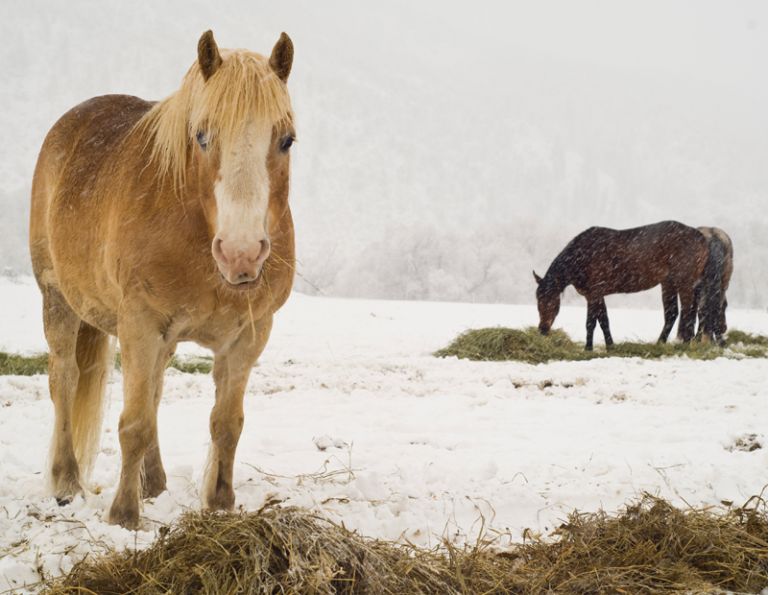
Main Photo: Pam Mackenzie
Blogs & Podcasts
Advertisement

Related Articles


Advertisement

Featured Stories





Advertisement
