Deworming

caring for older horses, senior horse care, should i deworm older horses, what age should i retire horse, sidewinder gait older horse, ppid senior horse, bute for horses, dental care horses

The average life expectancy of horses is around 20 years, but some survive into their 40s. Horses 20 years of age and older increasingly account for a larger percentage of the population, in part due to advances in veterinary care.

stomach Bots, equine tapeworms, bot flies, Dr. Wendy Pearson, University of Guelph, larvae pupate, horse care, Seasonal Parasite Control

Stomach Bots and Tapeworms - Your parasite management program should give some attention to stomach bots and tapeworms. To control these parasites more effectively, it helps to understand their life cycles.

can you put horses and cattle together, can horses and cows share grass, equine parasite control, deworming horses, preventing worms in horses

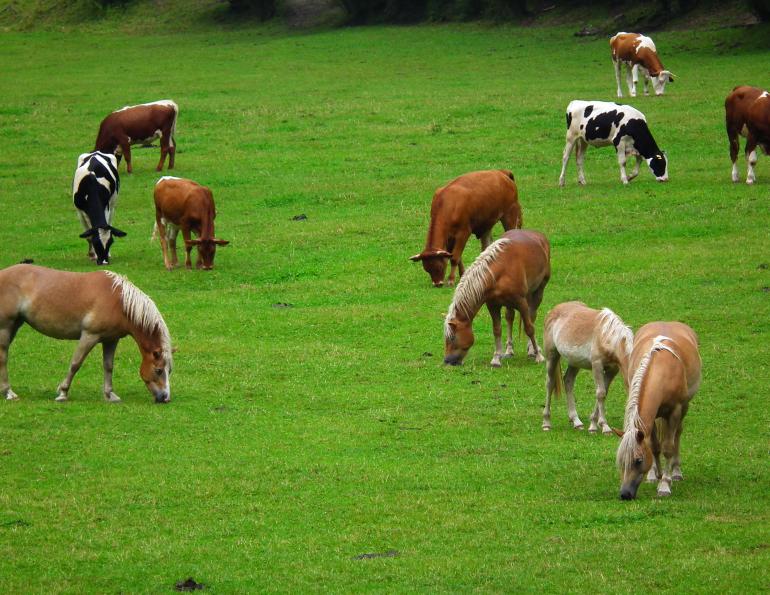
A French study has confirmed that mixed grazing with cattle helps control strongyle worms in horses. Grazing horses with cattle is often suggested as a useful pasture management tool to help control strongyle parasites. However, there has been little research to assess the benefit.

Does how often should the vet see my horse? How often should the farrier see my horse? how to deworm horse, when to vaccinate horse, preventing sweet itch horses, how much water horse need, steve chiasson

Each season brings with it certain needs for equine care, and an annual horse health care agenda can help with some of the planning as the months rapidly roll by. Horse owners are good at knowing the value of organizing and preparing ahead to help their horses stay healthy, and to budget for the more expensive seasonal needs ahead of time.

Equine Guelph, equine manure, horse manure, horse deworm, horse parasite, horse worm, equine worm, equine parasite, fecal egg count, horse fecal, equine fecal, Canadian Horse Journal, horse Canada, horse sport, horsemanship, Western horse, English horse

When a growing resistance to dewormers is cited as a major issue concerning horse owners today, a fecal exam to see if your parasite control program is working makes sense. Collecting a manure sample is easy, but it must be done properly to ensure accurate test results.

equine worm control, worm-eating fungus in horses fights worms, what is Anthelmintic resistance?, what is Duddingtonia flagrans?

A worm-eating fungus brings new hope in the fight against parasitic gastrointestinal worms. Anthelmintic resistance is now a widespread and growing problem. It is becoming increasingly clear that we cannot rely on chemicals alone to control gastrointestinal parasites.

horse deworming, equine deworming, tapeworms in horses, equine tapeworms, Mark Andrews Equine Science Update

Where you keep your horse can influence the risk of tapeworm infections, according to research from Poland. Recommendations for deworming horses have changed over the years to take account of widespread anthelmintic resistance and changing patterns of infection.

Pages