


Riding the Nervous System: The Horse and Rider Connection

Updated:
May 22, 2026How Regulation Affects Confidence, Performance, and Feel
By Annika McGivern, MSc, Sport and Exercise Psychology
Why does your nervous system matter to your horse? When was the last time you got tense during a ride and created tension in your horse? Or did your horse get tense and create tension in you? This common situation can be difficult to recognize with certainty. Often, it happens so fast that you genuinely aren’t sure who tensed first. Most riders are familiar with the idea that horses feel their tension and vice versa but are less clear about the underlying reason or how to prevent or stop these frustrating cycles of tension.
Riding is not just based in skill; it is a partnership of two nervous systems between two living organisms. In this article, we’ll take a closer look at what is happening below the surface during these tension cycles. We’ll explore what nervous system regulation means, how horse and rider influence each other, and how this shows up in performance, confidence, and behaviour.
To succeed, you don’t have to figure out how to be perfectly calm 100 percent of the time while riding — that would be an unrealistic goal. Instead, this is about better understanding how your inner state affects your horse and practical strategies for regulating it.
What is Nervous System Regulation?
Your nervous system is your body’s automatic safety and energy system and, in fact, it’s awesome. It keeps us safe and appropriately energized by moving us between two main modes. The first is an alert or protective mode in which we are ready for action or danger, and the second is a settled or regulated mode in which we are ready to rest, learn, think clearly, and fine-tune our movements and behaviours. Horses have the same system with the same two modes, and both horses and humans regularly move between these two states.
Related: Navigating Stress and Emotions for Success at a Horse Show
Related: Psychology for Equestrians: First, Focus on Yourself
When either rider or horse gets stuck in alert/protective mode, riding feels more difficult. This is because riding requires balance, timing, feeling, and adaptability, all of which are harder when the nervous system of either partner is overloaded or stuck. A healthy, regulated nervous system can move in and out of either mode and respond appropriately to what’s happening. Regulated does not mean feeling sleepy, passive, or tuned out. It means having the appropriate amount of alertness and relaxation for the situation we are in and being able to adapt and change as the situation changes.
Horses Are Wired to Read Us
As socially dependent animals, horses evolved to survive by noticing tiny changes in muscle tone, breathing, posture, and pressure. A tense rider changes their seat weight, leg pressure, rein contact, and rhythm, often without realizing it. Horses don’t interpret this as “my rider is nervous,” they experience it as information about safety or threat. This helps explain common experiences such as horses getting tight when riders are anxious, or horses behaving differently at shows even when nothing obviously scary has happened, or horses feeling calmer with one rider than another. Realizing this can help riders interpret “difficult” horse behaviour differently. Often, horses are just responding to information the rider doesn’t realize they are communicating.
Co-Regulation: How Horse and Rider Nervous Systems Influence Each Other
When two beings move together closely, their nervous systems tend to synchronize. This happens in many types of partnerships such as parents and children, teammates, and romantic partners. In riding, this can show up between horse and rider as shared tension or shared relaxation, as well as synchronized settling after stress. This doesn’t mean horses simply absorb our emotions or vice versa. It means both the horse’s body and the human’s body are responding to pressure, movement, breath, and timing in the other. Regulation flows both ways and as such, a calm, steady horse can help a rider settle, and a calm, steady rider can help a horse recover faster after stress. This creates a new perspective for managing challenging, high-tension moments. Instead of simply trying to control the horse, the rider can learn how to positively influence the shared system they’re in with their horse.
To start, it helps to be able to identify what dysregulation looks like in real riding situations. Here are a few examples.
- Before a jump, the rider holds their breath or tenses in the saddle, and the horse rushes or backs off.
- After a spook or mistake, the rider tightens and breathes faster, and the horse stays on edge.
- At competitions, the heightened environment means both horse and rider are tense and less focused.
All these examples are caused by the same cause-and-effect loop. Horse or rider tension leads to altered signals — altered signals lead to horse responses — horse responses increase rider stress, and the loop continues unless interrupted. This matters because chronic tension in riders and horses can lead to confusion, resistance, shutdown, and inconsistent performance.
Related: Harnessing the Power of Visualization in Equestrian Sport
Related: High Performance Habits for the Horse Competition Season
However, it’s important to know that this loop is normal and happens to everyone, including very experienced riders. The key is to become more aware of it so that you can spot these moments and respond sooner instead of escalating them.
In contrast, regulation supports learning and performance in horse and rider. Remember that calm doesn’t mean slow or lazy. Instead, think of calm as an ideal regulated state that supports learning. Horses learn best when their stress is manageable, signals are clear, and recovery happens quickly after mistakes. Regulation supports consistency, adjustability, and confidence in horse and rider and creates the conditions for high performance. My favourite way to think about this is that learning how to help myself and my horse feel safe enough to learn is a key part of being a good rider. Top performance is born from readiness and clarity, not force or pressure.
Practical Tools: How Riders Can Support Regulation
We know that regulation flows both ways; however, as the human in the partnership we have the ability, and the responsibility, to learn how to be the primary regulating partner. Learning and applying simple actions can help you become more skilled at regulating yourself and, via coregulation, helping your horse regulate.
Before the ride: Start before the ride by practicing self- awareness. Before you enter your horse’s space, take a moment to check in with your mind and body. Assess if you’re carrying tension in your jaw or shoulders. Focus on your breathing and use it to become more present. Set an intention for how you want to ride, not just what you want to do that day.
During the ride: Bring your self-awareness with you on the ride and regularly check your body for tension. Use your breathing to settle yourself, release tension, or move through tense moments. After mistakes, pause and soften your mind and body. Think about resetting instead of pushing through. After a stressful or tense moment, be mindful of both your recovery time and your horse’s.
After the ride: Try to end on a note of clarity, not exhaustion, even if that means ending with something easy or simple. Allow time for down-regulation after intense focus and effort by letting your horse walk or trot with a low, loose, quiet contact. Reflect on the ride with curiosity rather than judgement, and identify the moments where tension changed things.
Overall, it’s important to remember that you are not responsible for controlling everything during the ride. You are simply responsible for your side of the partnership and doing your best to manage yourself well. This is accomplishable with simple tools that fit into normal, everyday riding.
How Regulation Supports Welfare
Persistent dysregulation in horses can be a sign of confusion, fear, discomfort, or pain. This can show up as challenging or inconsistent behaviour, unpredictable performance, resistance, shutdown, and even aggression. Looking at horse and human behaviour through the lens of nervous system regulation encourages us to see all behaviour as a clue to how regulated or dysregulated the living being is. With humans we have the added tool of language to get to the bottom of what’s going on, but with horses we must pay attention and deduce what we can from what we observe. When we listen earlier, ask better questions, and avoid escalation, we can follow these clues to a better understanding of our horses’ experience and the root cause of their behaviour.
The key takeaway is that every ride, and even every interaction, is a nervous system conversation between you and your horse. When riders learn to regulate themselves, communication improves and confidence grows on both sides.
I hope you’re inspired to see regulation as a skill which, like riding itself, will improve with practice. Progress comes from awareness and practice, not perfection, so give yourself permission to be imperfect and get out there and give it a go!
Related: Why Curiosity is an Essential Mindset in the Saddle - Psychology for Equestrians
Related: Equestrian Psychology - Remain Calm and Ride On
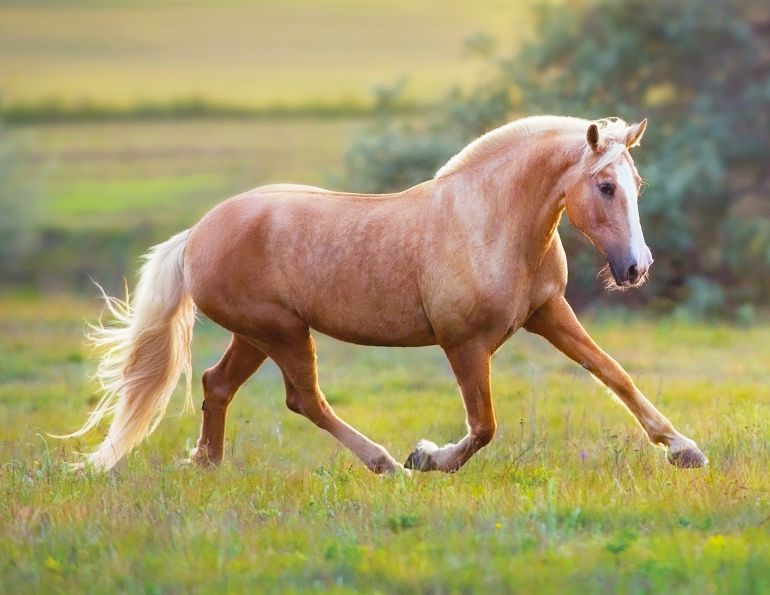
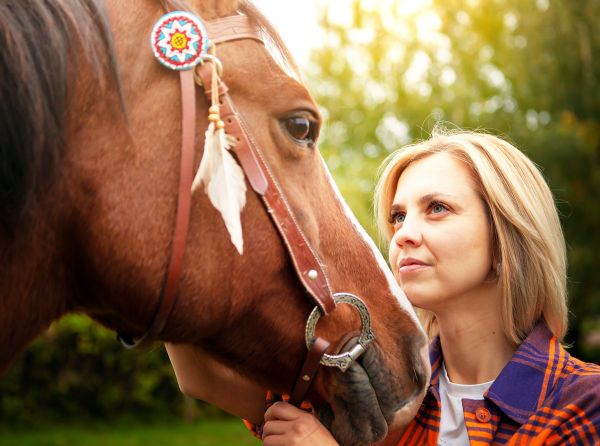
Photo: Alamy/Manfred Grebler
Blogs & Podcasts
Advertisement

Related Articles


Advertisement

Featured Stories







Advertisement
