Schooling

Jec Ballou horse training, core exercises horse, balance exercises horse, groundwork horses, pole work horses

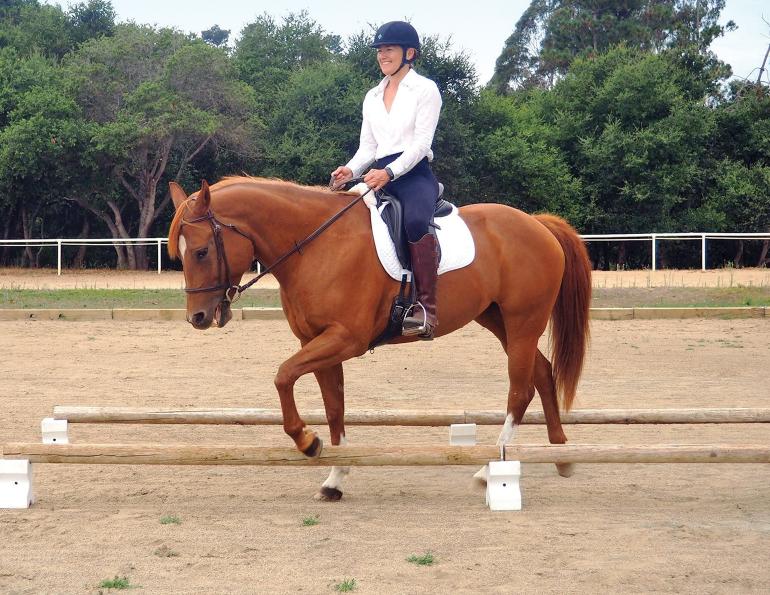
Stability Before Strength - Balanced muscular development cannot happen without first achieving a body that can stay stable throughout movement. In other words, a horse that is wiggling around trying to find balance, or one that has found balance by adopting a crooked posture, cannot develop strength in the ways that lead to better performance. Before a horse can add power to his locomotive muscles, he needs to find joint and limb stability while moving in his basic gaits.

how to correct a problem horse, allowing the horse to figure it out, will clinging horse training

There is always a reason when things go wrong, and we have to accept at least half of the responsibility. Remember it is we who are asking for certain acceptable behaviour; if we have not defined what is actually acceptable then the horse is right to be wrong.

equine behaviour patterns, equine psychology, horse trainer Will Clinging

When I take on any horse there is a period of getting to know what I am dealing with in terms of personality, sensitivity, confidence, past training, possible underlying physical issues, fears, etc. In addressing any behaviour patterns there are many intangible things that we do not always take into consideration.

hard-mouth horses, equine hard mouth problems, sore equine mouth, equine hard mind, overcoming equine hard mouth, overcoming equine hard mouth, teaching the headstrong horse

Most people who are involved with horses have at some point ridden a horse with a “hard mouth.” There is a lot of advice and equipment designed to deal with this problem but understanding how the mouth became hard would be more help than a stronger bit. I believe that there is no such thing as a hard mouthed horse; they are “hard minded” horses.

Riding with Quiet Hands

Your hands communicate messages such as slow, turn, and flex to your horse. When the horse responds to your request, you respond with a reward, or a pause in which your horse finds freedom. Unsteady hands are like background noise that drowns out your signal.

Practice Between Riding Lessons, riding between horse lessons, training horse on your own, lindsay grice

It is a real asset for a young person to have a parent who is so supportive of their riding. Conflicts can be kept to a minimum if you’re careful to keep your role separate from the coach. (Failing to do so is sure to result in: “Well I’d like to see you do it, if you think it’s so easy!”).

conditioning horses, keeping horse fit, how to keep horse healthy and strong

Whether your horse is destined for the rodeo grounds, the jumper ring, or local trails, there is an expectation that he will be able to perform the tasks you ask of him at a certain level. By producing mild stress on the body with exercise, a horse’s systems — cardiovascular, muscular, skeletal, and others — will adapt, and over time this leads to increased fitness.

handling horses safely, equine guelph research, parents of horse lovers, coaches of child horse riders

Ph.D. candidate Lara Genik and Dr. C. Meghan McMurtry from the University of Guelph’s Department of Psychology conducted a survey at the 2015 Royal Agricultural Winter Fair (RAWF) in Toronto, looking into the prevalence and impact of less studied painful incidents among children while handling and riding horses. Genik’s research survey set out to understand common painful incidents associated with riding and to gain insight that could potentially lead to intervention through safety and educational programming.

should i rest my horse? Will clining training, how to keep a happy horse, do horses need downtime?

What does your horse do for a living? Does he need a change from your routine to keep him mentally fresh and physically rested, or does he need a challenge mentally and physically to make him safe to be around? In this article I will concentrate on horses that are working regularly and horses that are seldom working. Both of these scenarios can be detrimental to the horse’s mental and physical well-being.

equitation science, how to horses learn, learning theory horses, tania millen, international society for equine science ises

What is it and how can it help horses and riders? Riders train horses to act in ways they deem positive, whether it’s jumping a jump, walking down a trail, or performing movements in an arena. But to train horses effectively and safely, riders, trainers, and coaches must understand how they learn and react. Over the past 15 years, equine scientists have researched the learning theory of horses — how horses process, retain knowledge, and learn. Equitation science applies this evidence-based learning theory of horses to horse training, and explains horse behaviour based on horses being horses – without attributing human emotions, ways of thinking, or behaviour, to them. It’s a burgeoning field that is changing the way many riders and trainers think and act.

Pages