Fear in the Saddle: The Emotional Response
Updated:
March 22, 2024Part 2 (Read Part 1: Fear in the Saddle: The Visceral Response)
By April Clay, M.Ed., Registered Psychologist
Equestrians often encounter fear for two primary reasons. One stems from the risk of getting hurt, while the other comes from threats that aren’t physical at all. These non-tangible fears involve emotional vulnerability—such as the dread of failing, feeling embarrassed, or letting others down.
Anyone who has wrestled with these worries knows they can set off the body’s alarm system just as powerfully as a real danger. The result is a flood of stress that undermines enjoyment in the saddle and reduces effectiveness as a rider.
When Pressure Becomes Overwhelming
Many of us worry about whether we’ll ride well or reach our goals, but for some, those thoughts escalate into something paralyzing. Consider Jodi: in training at home, she rides with skill and shows all the ability needed to succeed in her division. Yet the moment she arrives at a show, her confidence falters. She becomes fixated on the idea of disappointing others. She convinces herself that anything short of perfect will mean failure, not only to those watching but to herself as well. This mindset shifts her attention, and she often makes errors like going off course.
Related: Why Curiosity is an Essential Mindset in the Saddle - Psychology for Equestrians
For Jodi, competition isn’t simply about riding anymore—it’s tied to her sense of self-worth. She equates her performance with her value as a person, raising the stakes so high that anything less than flawless feels devastating.
From the outside, these fears may look unreasonable, but to the rider experiencing them, they feel very real. If you’ve ever struggled with this kind of anxiety, you may already realise that your fears seem larger than they should be—or perhaps others have pointed it out. The hopeful news is that these feelings don’t have to control you forever. There are proven strategies to lessen their hold and help you regain confidence, focus, and enjoyment in your riding.
Get To Know Your “Internal Alarmist”
You can think of your fear as being driven by an internal alarmist. This little creature whispers things in your ear that make your worry spin out of control. It’s a well-meaning sort of voice; it wants you to succeed after all. However, it’s also extremely fearful and wants you to avoid disaster at all costs. The alarmist tends to show up when you are at your most vulnerable, or in the areas of your life where you feel most insecure. So if you are showing in a new division and feeling doubtful…here it comes. If you are worried about all those people in the stands and what they’re thinking of you, know it’s there.
Internal alarmists are usually overreacting troublemakers. You’re trying to focus on your job, and they keep taking you further away from it. How will you respond to it? Try reassuring and soothing this part of yourself instead of trying to ignore it. Part of this reassurance will come from the plan you develop ahead of time to cope with your fears, which just happens to be coming up next in this article.
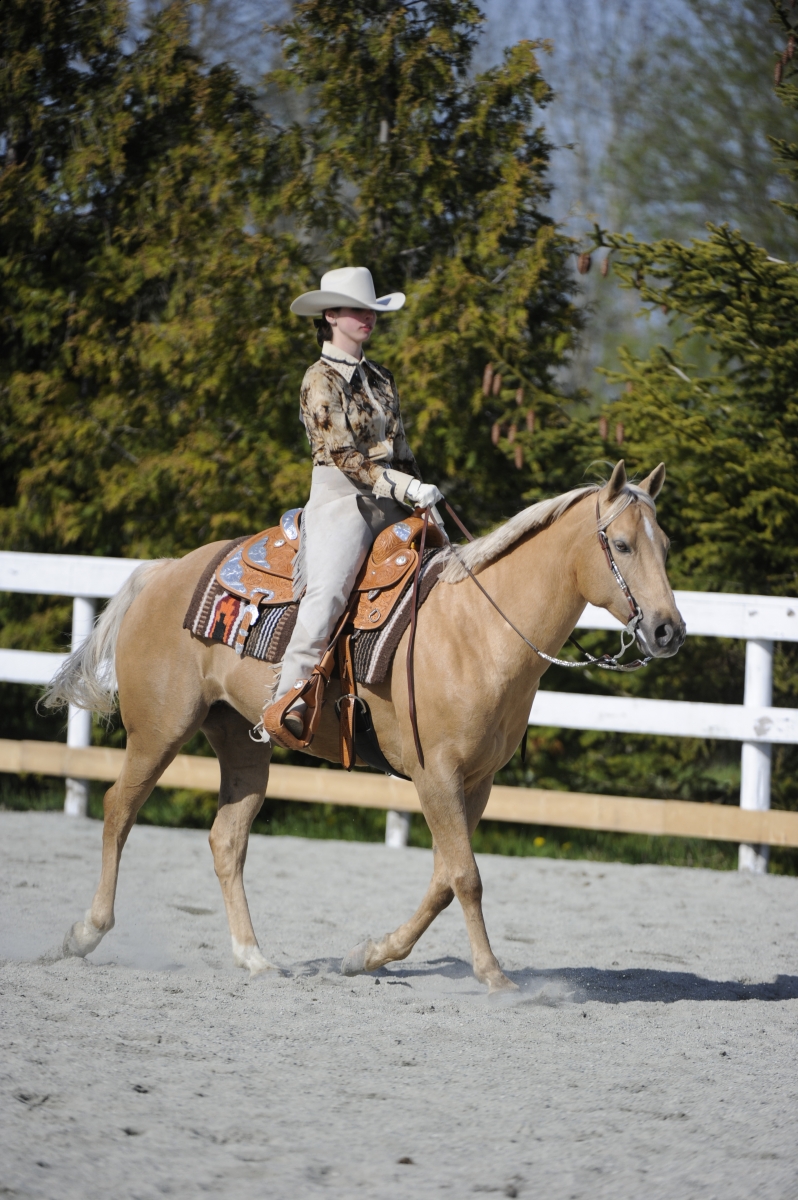
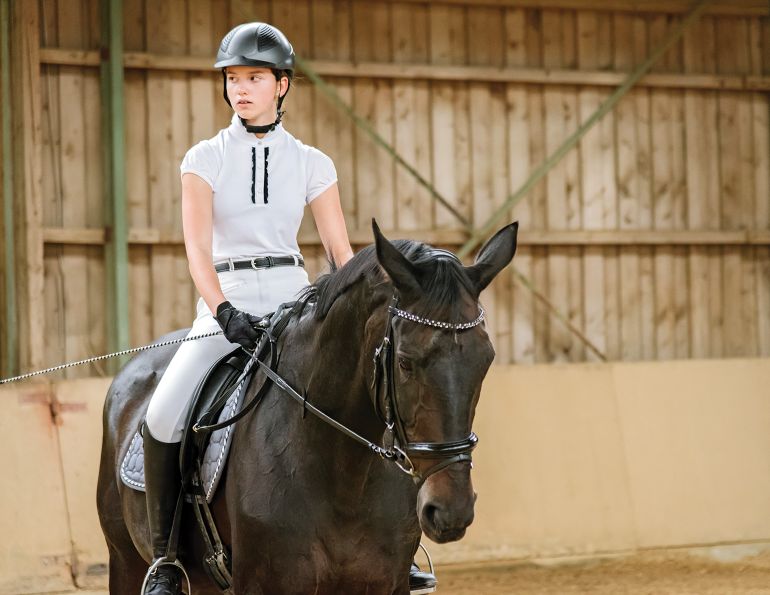
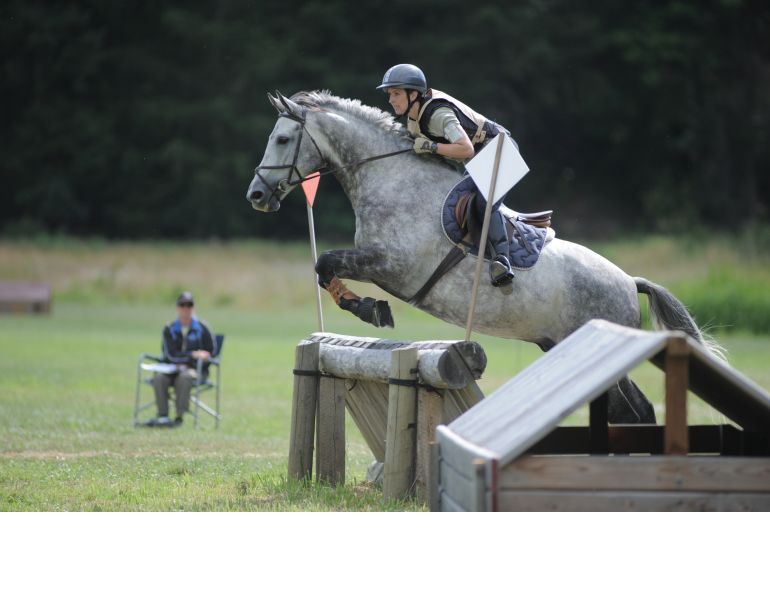
Keep your perspective when high stress situations threaten to distort your thinking. Focus on the elements of your performance that you can control. Photo: Robin Duncan Photography
Get Perspective and Support
Because high stress situations have a way of distorting your thinking, it’s important to look for and get to the truth of the matter. Look around you: are there people you trust to give you the straight goods? They might be a coach, parent or stablemate. These people can act as “alarm consultants” to your panic. They can help you gauge the real size of a thread, and figure out how you can approach it. They can talk you down until you can think clearly and formulate your approach.
For Jodi, this meant getting some reassuring words from her trainer before an upcoming horse show. They would sit down together and review all the skills she had been developing, and all the hours of training she had committed to and seen through. Jodi was then able to remind herself of all the reasons she deserved to compete, was competent to compete, and that she was entitled to now enjoy the fruits of all her labour.
To gain perspective, it’s also important for Jodi and others like her to remember that one competition is just that: one. It sits in a string of experiences you will have throughout your riding career. So be clear: many opportunities, not just one.
Related: Equestrian Psychology - Remain Calm and Ride On
And do not – and this is important – gamble your sense of self on how well you perform. Those stakes are too high, and you will most certainly lose. You’ll be who you are at the end of the day whether you are wearing a ribbon or not. There are many more aspects of you that are cool, interesting and competent besides just your riding. Think of wanting to compete, instead of needing to compete. Changing your perspective in this way can be a big pressure reliever.
Abandon Perfection
One of the greatest thieves of sport self esteem is the habit of clinging stubbornly to the idea of perfection. Some riders believe that if they are not reaching for perfection, their goals are not high enough. The truth is, perfection is not a high goal, it’s an impossible one. To illustrate this point, I often will ask people in my office to demonstrate what perfection is. I say, “Let’s imagine we are at the world chair sitting championships. Everything hinges on you being able to sit perfectly. How are you going to do that?” They inevitably look at me like I’ve lost my mind, but we always have a good discussion after this. There is no sitting perfect, there is sitting well, and this can mean many different things.
Because perfection is an impossible construct to define, by its nature it creates uncertainty. Your mind does not really know what it is aiming for, only that the bar is high and the pressure is on. To reduce this experience of pressure, you are going to have to redefine your target. Abandon the word “perfection” and look for alternatives. How about competence? How about effectiveness? Then get more specific than this. What is a competent body position and what can I do to attain this? As you can see, your mind (and the rest of you) will have a much easier time conceiving of what you want.
As well, try to accept that each performance you give will be different, just by virtue of the variables involved. You cannot control everything, so don’t even try. Choose what you can control, and allow your focus to be about these elements.
Cultivate Your Rational Mind
Once you have found out what it is you fear, go beyond the alarm and look at the situation without all the emotional cloud. This may mean you have to attend to your body a bit first, like doing several cycles of deep breaths to calm your system. Another nasty but natural by product of the fight or flight system is what it does to your thought process. Your mind becomes frantic to assess and monitor whatever the risk or danger is. What you experience is many swirling thoughts that further confuse and frighten you. So take a step to calm your body, and you will also experience a calming of your mind.
Next, name your fear. Say, “I know what that alarm is, that means I am feeling afraid of failing.” Calling it what it is helps you organize your thoughts and set up a problem solving approach.
Finally, be ready with your replacement thoughts. These are the directions you want your mind to follow instead of the scary chatter circulating in your head. Jodi came up with these:
- Focus on the small things, focus on my task, focus on my horse;
- Everyone wants me to do well, they are behind me;
- Mistakes are a part of riding, even the pros make them;
- All my training and hard work went into this, now I get to enjoy it!
Actually, Jodi’s list was much longer than this, and she made a point of adding to it every so often in her riding journal. This helps her begin to create a new language for herself, and a new response to her fears. Like Jodi, you would do well to remember this: dealing with your fears is not a one shot deal. You will have to decide on a plan, and repeat and repeat. If you do this, you’ll find that your internal alarmist will get shrunk back down to the size it was meant to be.
Read Part 1: Fear in the Saddle: The Visceral Response
Related: Navigating Stress and Emotions for Success at a Horse Show
Blogs & Podcasts

Advertisement

Related Articles


Advertisement

Featured Stories





Advertisement