Millen, Tania Articles

Canadian Sport Horse Cilroy, ridden by John Rumble at the 1956 Olympics, where Canada won team bronze in three-day eventing.

Some of North America’s top sport horses are the result of 100 years of matchmaking by Canadian Sport Horse Association breeders. From Olympic medal winners to champion hunters, show jumpers, eventers, and influential breeding stallions, these exceptional horses have made their mark on equestrian sport in Canada and internationally. Tania Millen highlights 22 remarkable horses whose achievements reflect the association's 100-year history.

equine alternative therapies Canada, equine veterinary regulations, horse care laws Canada, non-veterinary equine practitioners, equine massage therapy, equine chiropractic care, equine dentistry regulations, farrier regulations Canada, equine hoof care, horse rehabilitation therapy, equine acupuncture, equine homeopathy, equine complementary therapies, animal health practitioner certification, equine practitioner qualifications, horse care provider insurance, veterinary supervision requirements, unauthoriz

Tania Millen explores Canadian regulations for equine massage, chiropractic, dentistry, and farriery, and how horse owners can choose qualified practitioners.

horse fitness, equine fitness training, horse conditioning program, how to get your horse fit, 12-week horse fitness plan, horse fitness after winter, spring horse conditioning, horse exercise program, horse strength training, horse stamina, equine cardiovascular fitness, aerobic training for horses, anaerobic training horses, horse musculoskeletal strength, equine core exercises, horse topline development, horse conditioning exercises, equine cross-training, interval training for horses, hill training for

Tania Millen shares expert tips and a 12-week horse fitness plan to build strength, stamina, and conditioning while helping prevent injuries.

Canadian Sport Horse Cilroy ridden by John Rumble at the 1956 Olympic Games, where Canada won team bronze in three-day eventing.

The Canadian Sport Horse Association (CSHA), the oldest performance horse registry in North America, is celebrating 100 years of breeding excellence in 2026. Founded in 1926, the association has played an important role in shaping Canadian sport horse breeding and producing generations of successful performance horses. Tania Millen explores the organization's remarkable history, the breeders and horses behind its success, and the legacy it continues to build for Canada's equestrian industry.

tiffany foster canadian csha, tiffany foster symposium, straightening your horse, horse backing up, positive horse training

Canadian show jumping star Tiffany Foster shares expert training advice to help riders improve their horses' rideability, stride adjustability, and jumping performance. At a Canadian Sport Horse Association symposium in Alberta, Foster demonstrates practical show jumping exercises while emphasizing positive horse training, clear communication, and the importance of building strong foundations for competitive success.

dr. william hodge, regenerative medicine horses, meadow lane equine clinic surrey bc, equine locomotor pathology, joing pain horses, pro-stride horses, veterinarians equine british columbia

Regenerative medicine covers a suite of different technologies that enhance the horse’s natural healing process and help them heal faster. Equine veterinarians have been using regenerative medicine for the past decade to treat joint disease and soft tissue injuries; however, it’s new to many horse owners and only equine veterinarians specializing in sports medicine tend to offer the technologies.

Canadian Olympic show jumper Amy Millar teaching riders at the CSHA centennial show jumping clinic in De Winton, Alberta, June 2026.

“The goal is a horse that jumps consistently well because it has been shown the correct way every time,” says Canadian Olympic show jumper Amy Millar. At a special clinic celebrating the Canadian Sport Horse Association's 100th anniversary, Millar shared valuable training insights with riders in Alberta. From building a strong foundation and improving rhythm and balance to allowing horses to learn from their mistakes, Tania Millen explores Millar's practical advice for developing confident, consistent show jumping horses.

Horse and rider representing Canada’s diverse equestrian community and organized horse sport.

Navigating provincial and national equestrian organizations - No single organization supports all things “horse” across Canada. Coaches, trainers, riders, drivers, owners, breeders, and the horses themselves are represented by myriad organizations.

Canadian Working Equitation team riders Kerry Marit, Pam Esteves, Susanne Zimmermann, and Ilona Berbekar at the 2026 World Championships.

In August 2026, four Canadian team riders and one alternate travelled to Europe to represent Working Equitation Canada at the 2026 Working Equitation (WE) World Championships in Jerez de la Frontera, Spain from September 8 to 13. It was the first time that Canadian riders had participated in the WE World Championships, which is hosted every four years by the World Association of Working Equitation (WAWE). Four of the five riders were riding leased horses.

alberta's wild horses, wild horses alberta cull, horses in alberta, feral horse management framework, alberta wildies society, haws, the wildie west podcast, wild horses of alberta whoas, alberta mountain horse

About 1,500 horses run free on the eastern slopes of Alberta’s Rocky Mountains north of Highway 1, which bisects Calgary, and south of Highway 16, which splits Edmonton. Their presence is controversial.

Stable Recovery: How Horses Transform Homeless Men into Horsemen by Ken Snyder

Published by Purdue University Press 2026

ISBN-10: 1626712255, ISBN-13: 978-1626712256, 216 pages

Tania Millen riding El Capitan, a gaited part-Peruvian Paso gelding, on a horseback tour near Santa Fe National Park in Panama.

“Do you want to run?” Chrissy asked. “Sure,” I said, as her spunky little grey gelding shot off up the road. El Capitan — the lanky, gaited part-Peruvian Paso gelding I was riding — followed. As we clattered up the hard-packed dirt road, I stood in the Western stirrups and gave him his head. I was on a two-week vacation in Panama and this was my second day riding with Horseback Panama near Santa Fe, 300 kilometres west of Panama City.

Nova Scotia Pony Express, Canadian Pony Express, horse history Canada, equine transportation history, Joseph Howe, 19th century communication, horses and news delivery, telegraph history, working horses history

Shortly after 5 pm on Wednesday, February 21, 1849, a lone rider galloped from the pier in Halifax, Nova Scotia west towards Digby, 232 kilometres (146 miles) away on the east coast of the Bay of Fundy. He carried a highly sought-after news packet that had arrived just moments earlier by the Cunard Royal Mail steamship Europa, from Liverpool, England.

Canadian working equitation rider competing with traditional garrocha during international competitio

Working Equitation Canada (WECan) has selected four riders and one alternate for Canada’s first team to compete at a working equitation world championship.

Tania Millen, Working Equitation Canada, WECan, opinion, Working Equitation World Championships, WAWE, Canadian working equitation, Canada working equitation team, working equitation selection process, Canadian equestrian sport, equestrian governance, team selection, athlete selection, equestrian transparency, horse sport Canada, Canadian horse industry, Sarah Bradley, Ilona Berbekar, Kerry Marit, Pam Esteves, Susanne Zimmerman, WAWE rankings, World Association for Working Equitation, equestrian opinion, Ho

Selecting athletes for any team is hard. Selecting athletes for the first Canadian team that a fledgling organization has ever sent to a World Championships is doubly difficult. However, using subjective selection criteria which results in the highest ranked rider being left off the team pretty much guarantees that sport enthusiasts will question the selection process, the organization, and whether they want to be involved in future.

preventing flies horses, diseases mosquitoes horses, fly sheets, fly masks, manure pile location, botfly eggs on horse, horse fly leggings, parasitic wasps

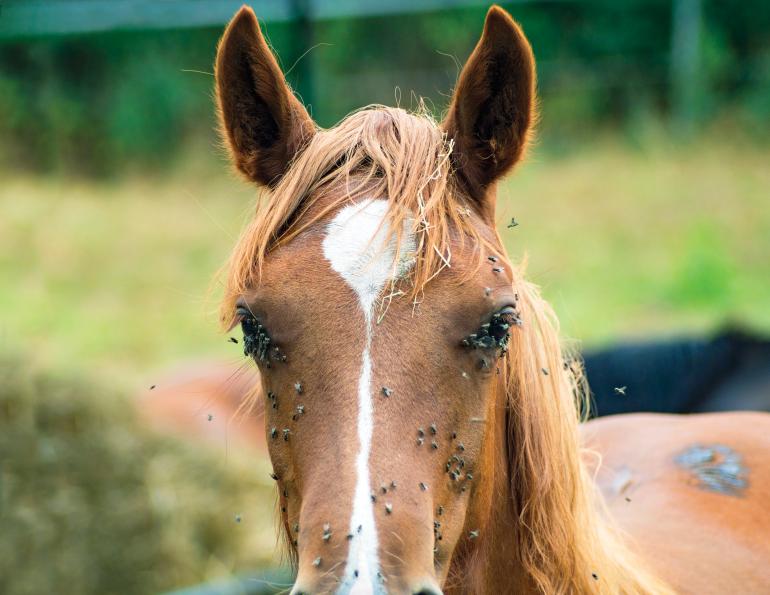
How flies spread parasites and disease - Flies are the bane of many horses’ existence from spring through autumn. In Canada, horse-biting flies include gnats (no-see-ums), black flies, stable flies, deer flies, horse flies, and mosquitoes, all of which create painful sores. Non-biting flies include house flies, eye gnats, face flies, bot flies, and warble flies, and can be just as irritating. It’s not just buzzing and biting that’s worrisome; flies may transmit parasites and diseases, can cause a horse’s immune system to overreact, and some use horses as hosts, all of which impact horse health. Preventing horses from being bitten is key. Before diving into solutions, here’s a summary of the damage that flies can inflict on Canada’s horses.

Horse Expo Canada, Tik Maynard, Elite Horsemanship Summit, horse training clinic, Canadian horse industry

Balancing results while doing right by the horse - Over 500 rapt horse lovers sat and listened to the two-hour long Elite Horsemanship Summit at Horse Expo Canada in Red Deer, Alberta on April 24, 2026.

family farms, how to run a family farm, horse farms, how to manage farm and family life, canadian farms, horse farms canada, managing farm and children, tania millen

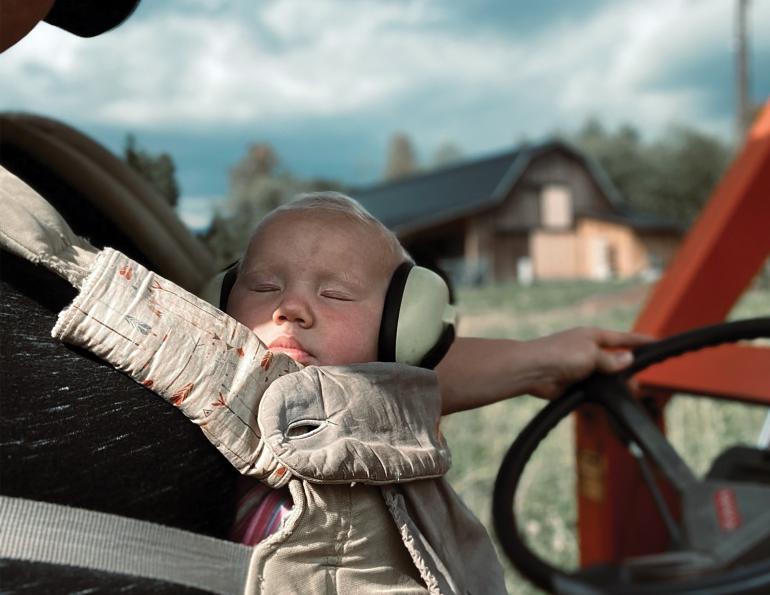
Running a family farm or ranch can be both demanding and rewarding. For these three Canadian families, the challenges of farm life are balanced by the many benefits of working together as a family.

horseback riding canada, riding horses in banff national park, riding horses rocky mountains, horseback riding western canada, mount assiniboine provincial park, tania millen

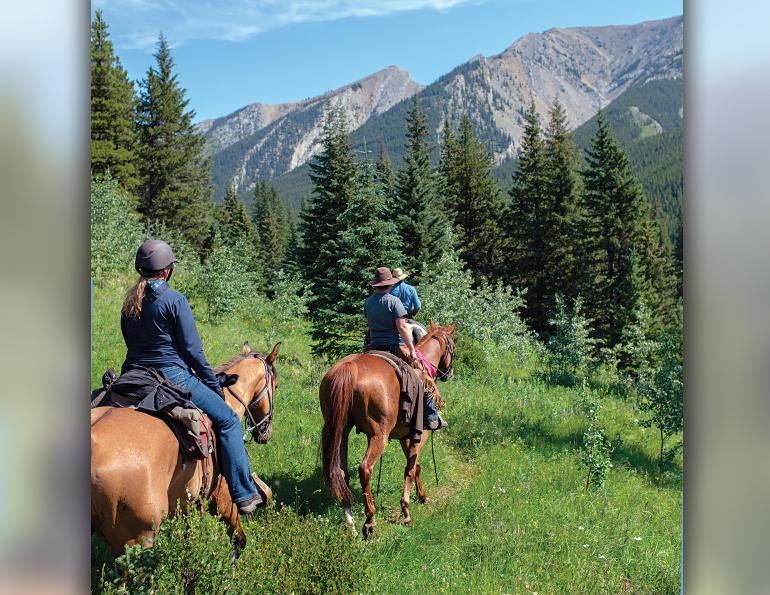
Holidays on Horseback - Sven, the Haflinger pack pony, jerked his head up and snorted. I looked uphill towards our camp and caught a humpy flash of beige ducking behind a stunted fir tree. Grizzly, I thought. I was hand-grazing Sven and my paint mare, Jewel, on a frosty July morning in Mount Assiniboine Provincial Park, British Columbia during a solo pack trip. When Sven jerked his head up again, a beige grizzly bear shambled downhill towards us. Just 20 metres uphill from the first bear, a second bear rose up on its hind legs out of the brush before dropping down onto all fours and following the frontrunner. As the two bears lumbered towards us, Sven danced around on his lead line while Jewel kept grazing, and my heart beat a little quicker. As I considered what to do, a third bear trundled out of the trees and followed the first two. They were all grizzlies, all full size, and all coming straight at us. I started to sweat.

out there first aid, emergencies with horses, riding accidents, trail riding safety, horse riding safely, horse riding first aid

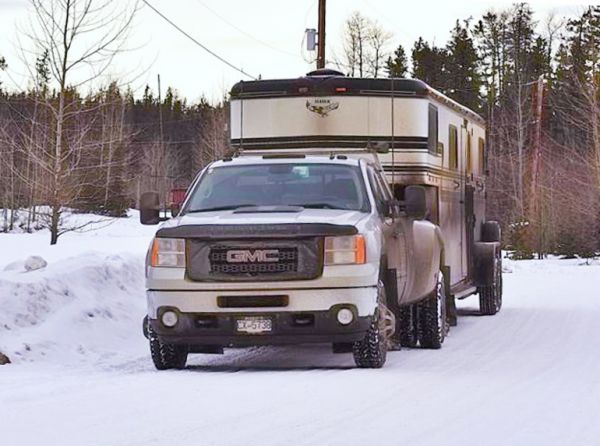
Rider Down! It’s a trail rider’s worst nightmare: getting hurt and requiring evacuation from a remote area. Whether out on the trails for a few hours or on an overnight trip, the reality that every recreational rider must face is that emergencies can occur. Preparation is key and the success of emergency evacuations has a lot to do with planning for their possibility. It can also determine whether a rider survives.

Pages